Sanjay Manjrekar’s praise for GT owners comes with direct swipe at Ambanis & MI – Sanjay Manjrekar Applauds Gujarat Titans’ Management, Draws Parallel with Mumbai Indians
Contents
Gujarat Titans’ Success Rooted in Unobtrusive Ownership
Former India international Sanjay Manjrekar has lauded the Gujarat Titans (GT) owners for their exemplary approach to team management, particularly their non-interference in cricketing matters. This commendation comes amid a season where GT has once again showcased remarkable consistency, a characteristic Manjrekar attributes directly to the operational freedom afforded to the team’s cricketing leadership. Since their establishment in 2022, the Titans have emerged as a formidable force in the Indian Premier League (IPL), reaching the playoffs in four out of their five seasons and clinching the coveted trophy in their inaugural year.
The franchise’s journey has been marked by stability and strategic foresight, even through a significant ownership transition. Last year, the Torrent Group acquired a majority stake from CVC Capital, yet this change did not disrupt the team’s on-field performance or management philosophy. This resilience underscores the robust foundational structure put in place by the franchise, allowing it to navigate external shifts without compromising its core cricketing objectives.
A Season of Resilience and Dominance for GT in IPL 2026
The IPL 2026 season has been a testament to the Gujarat Titans’ enduring strength and adaptability. After a somewhat volatile first half, which saw them oscillate between winning and losing streaks, GT found their rhythm. Their initial seven matches included a three-match winning streak sandwiched between two two-match losing streaks, indicating a period of finding their footing. However, the team decisively put this inconsistency behind them in the latter half of the tournament, embarking on an impressive five-match winning streak before eventually dropping a game. Their final league stage match victory further solidified their position, ensuring a top-two finish on the points table, an improvement over their third-place finish in the previous year.
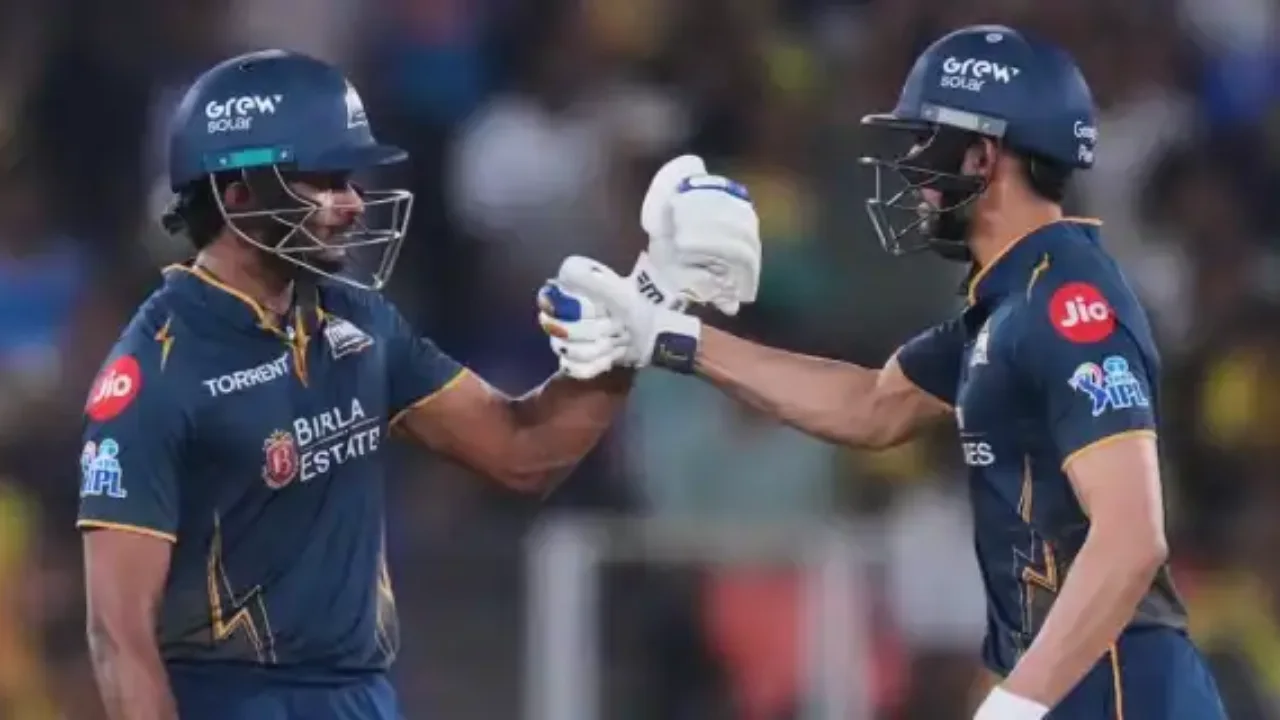
This consistency has been largely propelled by the exceptional form of their opening partnership, captain Shubman Gill and the dynamic southpaw Sai Sudharsan. This duo has consistently shouldered the bulk of the team’s run-scoring responsibilities, ably supported by the reliable number three, Jos Buttler. While the Gujarat Titans have occasionally faced criticism for adopting a ‘slow and conventional’ approach to T20 cricket, their method has unequivocally delivered results. Beyond their formidable top order, the team’s potent pace battery, spearheaded by the express pace of Kagiso Rabada and the all-round capabilities of Jason Holder, has also been instrumental in their triumphs. Furthermore, the resurgence of ace spinner Rashid Khan, who appeared to be rediscovering his world-class touch after a quieter period, added another crucial dimension to their bowling attack.
Manjrekar’s Insight: The Power of Non-Interference
In an exclusive conversation with Sportstar, Sanjay Manjrekar delved into the specifics of what he believes makes the Gujarat Titans a successful model. He particularly highlighted the understated presence of the owners, emphasizing that they are not publicly visible or overtly involved in day-to-day cricketing operations. Instead, Manjrekar pointed to the pivotal role played by Director of Cricket, Vikram Solanki, a former England cricketer with a corporate background, who is entrusted with handling the team’s operations. Manjrekar also reserved significant praise for head coach Ashish Nehra, crediting him for the team’s remarkable on-field consistency and fostering a stable environment.
Manjrekar articulated his observations, stating, “It is actually a remarkable story because it is a new franchise, and it is not a franchise where you see the owners sitting on the sofas; they are not in your face as such. Nobody knows the owners. The person handling the operations is a former England cricketer (Vikram Solanki), with a corporate background. So, it is a very interesting franchise, and their performances have been brilliant. Somewhere, Ashish Nehra, who has been the constant, should take a lot of pride in that.” This statement underscores the importance of a clear division of labor and respect for cricketing expertise within a franchise setup.
A Subtle Critique: The Ambani-Mumbai Indians Contrast
Manjrekar’s pointed comment about owners ‘sitting on the sofas’ was widely interpreted as an implicit critique, most likely directed at the mother-son duo of Nita and Akash Ambani, who own the Mumbai Indians. The Ambanis have been notably visible during their team’s matches, particularly this year, where they have often been seen seated on a specialized sofa near the boundary ropes. This high-profile presence has, in the past, drawn attention and even led to the BCCI introducing regulations concerning team owners’ interactions with players during matches, aiming to maintain professional boundaries and prevent undue influence on the playing field.
The contrast drawn by Manjrekar highlights a fundamental debate in professional sports franchise management: the optimal level of owner involvement. While passionate ownership is often lauded, a hands-off approach in day-to-day cricketing decisions, as exemplified by the Gujarat Titans, appears to be yielding significant dividends in terms of consistent performance and team stability. This model suggests that empowering cricketing professionals to make autonomous decisions can lead to sustained success, fostering an environment of trust and expertise rather than perceived micromanagement.
Gujarat Titans’ Playoff Challenge
Having secured the second position on the points table, the Gujarat Titans are now set to travel to Dharamsala for Qualifier 1. In this crucial encounter, they will face the table-toppers, Royal Challengers Bengaluru. The stakes are incredibly high: the victor of this match will earn a direct pathway to the IPL final, scheduled for May 31 in Ahmedabad. For the losing side, however, the tournament is not over. They will receive a second opportunity to make the final by competing in the second qualifier, which will be held in Mullanpur on May 27. This playoff structure ensures that consistent performers are rewarded with an extra chance, setting the stage for an intense and exhilarating conclusion to IPL 2026.