Why Rohit Sharma Is A Complete No Go For Mumbai Indians’ Captaincy? – Why Rohit Sharma’s Return as Mumbai Indians Captain is Not a Strategic Move
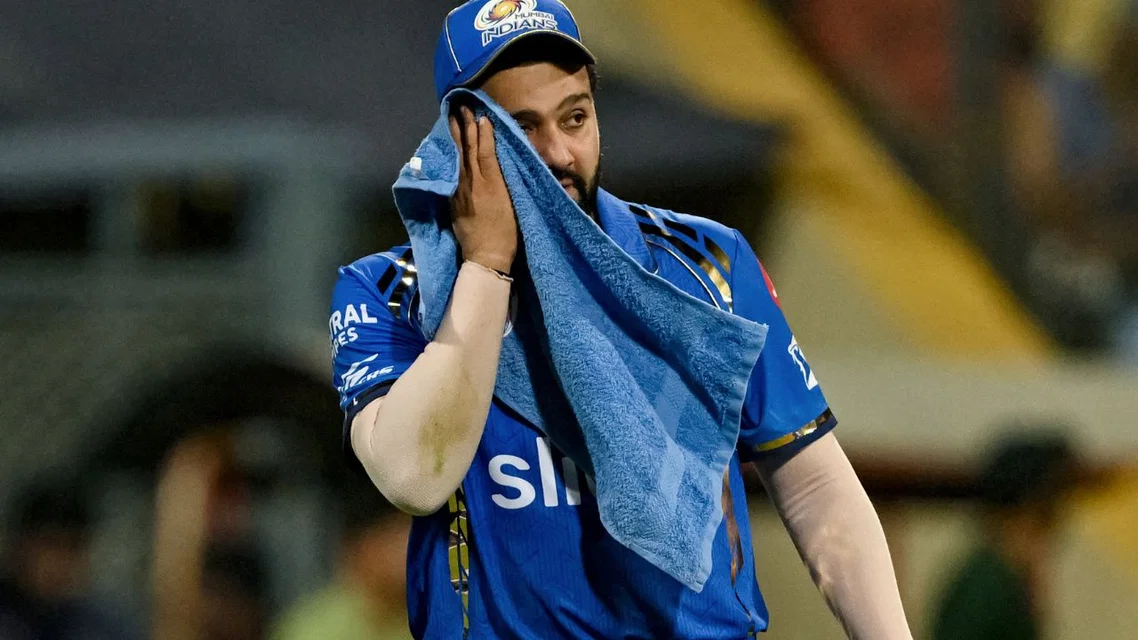
Rohit Sharma‘s name is synonymous with Mumbai Indians’ unparalleled success in the Indian Premier League (IPL). He is undeniably one of the greatest captains in the tournament’s history, having transformed the franchise into a championship-winning machine. Yet, the fast-evolving landscape of modern T20 cricket demands forward-thinking and strategic decisions, often necessitating a move beyond emotional attachments to past glories. With recent reports suggesting Hardik Pandya‘s potential departure from the captaincy role, the conversation around Rohit Sharma reassuming leadership has resurfaced. While understandable from a sentimental perspective, a thorough analysis reveals several compelling reasons why a second stint as Mumbai Indians captain for Rohit Sharma might not align with the franchise’s long-term strategic objectives.
Rohit Sharma. [Source – AFP]
Rohit Sharma The Batter: A Consistent Concern in the IPL
For nearly a decade, Rohit Sharma’s performance as a T20 batter in the IPL has not consistently reached the heights expected of a player of his caliber. Despite his global stature and immense talent, a striking statistic reveals that he has never registered a single 600-run season in his illustrious IPL career. This becomes particularly concerning when considering the pivotal role of dominant top-order batting in the success of contemporary IPL teams. The last instance of Rohit Sharma surpassing 500 runs in a single IPL season dates back to 2013, a significant period ago in the fast-paced world of T20 cricket.
Successful teams in recent IPL editions heavily rely on their top-order batsmen to provide consistent, high-impact performances. Players such as Virat Kohli, Abhishek Sharma, Vaibhav Sooryavanshi, Sai Sudharsan, and Shubman Gill have repeatedly delivered big runs, setting strong foundations for their respective sides. Mumbai Indians, however, have not received this level of sustained batting consistency from Rohit Sharma. Adding to this challenge, his strike rate has not consistently compensated for the volume of runs. He has crossed a 150 strike-rate in an IPL season only once in the last five years. Burdening him with the additional pressure of captaincy at this stage of his career could potentially hinder his individual batting further, rather than benefiting the team’s overall performance.
The Imperative for a Long-Term Captaincy Option
Mumbai Indians had already initiated a significant leadership transition when they appointed Hardik Pandya as captain, replacing Rohit Sharma. Regardless of public opinion, this move unequivocally signaled the franchise’s intent to cultivate a younger leadership core for the future. Rohit Sharma is currently 39 years old and will turn 40 next year. From a realistic and strategic standpoint, building the franchise’s long-term future around a player of his age is not a sustainable model, especially with a major IPL mega auction cycle anticipated in 2028.
For sustained success, a franchise of Mumbai Indians’ stature requires stability and foresight. The team needs to proactively identify and groom a younger captain who can lead them into the next era, ensuring a smooth transition into upcoming auction cycles. Continually reverting to older leadership options risks delaying an inevitable transition process that Mumbai Indians must undertake to remain competitive. Historically, Mumbai Indians’ remarkable success has stemmed from their superior long-term planning compared to many other IPL teams. While Rohit Sharma remains an undisputed legend for the franchise, reinstating him as captain now could be perceived as a short-term, emotionally driven decision rather than a strategically sound move aimed at securing the team’s future.
Rohit Sharma’s Recent Captaincy Record Does Not Justify a Return
There is no disputing Rohit Sharma’s monumental legacy, which includes five IPL trophies as Mumbai Indians captain, a record that places him among the very elite. However, it is equally important to acknowledge that he was also at the helm during the inception of Mumbai Indians’ ongoing trophyless phase. Following their fifth IPL title victory in 2020, Rohit Sharma captained Mumbai Indians for three subsequent seasons, from 2021 to 2023, without securing another trophy. For a franchise with Mumbai Indians’ expectations and history of dominance, a three-season title drought was a clear indicator of a significant decline.
This period of trophy drought has now extended to six years overall. While Hardik Pandya’s subsequent captaincy tenure did not immediately reverse the team’s fortunes, it is crucial to recognize that the struggles and the commencement of Mumbai Indians’ transition phase had already become apparent under Rohit Sharma’s leadership before the change occurred. In fact, Mumbai Indians faced considerable challenges after the departure of influential legends like Lasith Malinga and Kieron Pollard. Furthermore, Hardik Pandya himself had moved to another franchise, and Krunal Pandya also departed during that period, underscoring that the transition process under Rohit Sharma’s captaincy was not entirely smooth or immediately successful either.