Hesson Debunks Pitches ‘Myth’, Says There Will Be ‘Variety’ at ODI World Cup
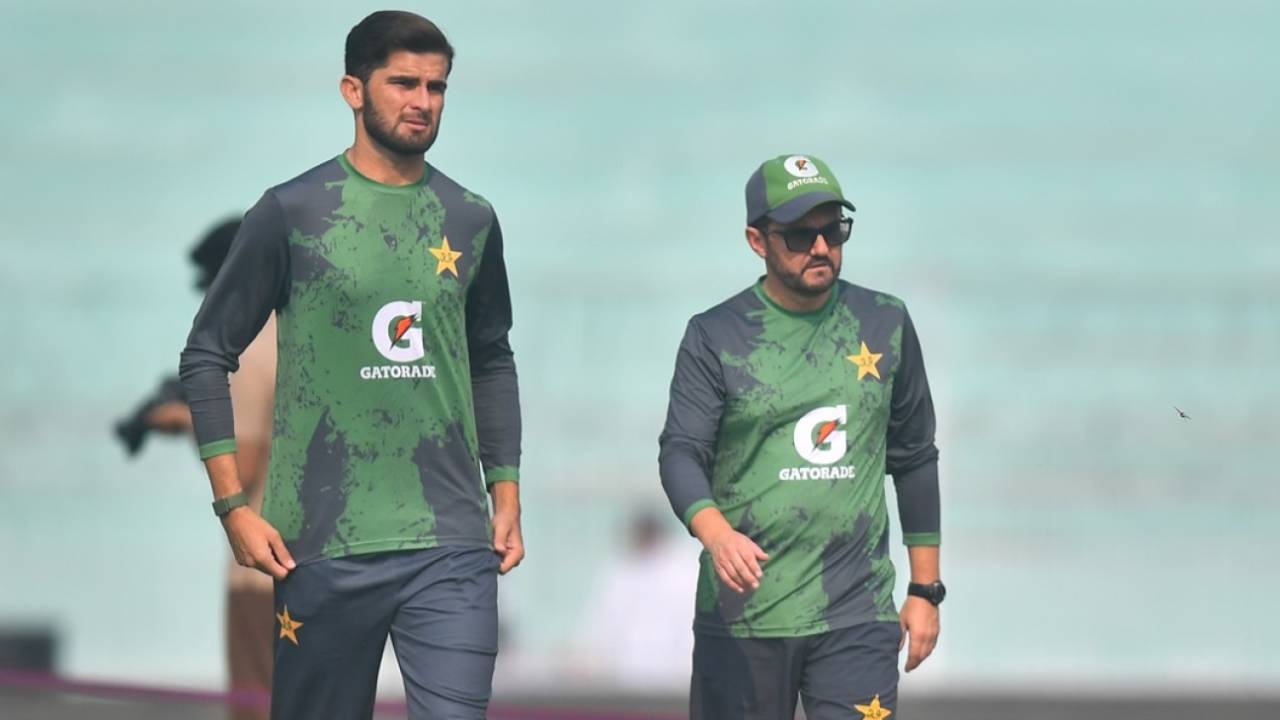
Pakistan’s head coach, Mike Hesson, has robustly defended the strategic decision to prepare a spin-friendly pitch in Rawalpindi for the first One-Day International against Australia, a match the hosts won handsomely by five wickets. This move, which saw spinners dominate proceedings, sparked debate among cricket enthusiasts and pundits alike, particularly concerning its relevance to future international challenges. However, Hesson has also offered a reassuring perspective on Pakistan’s long-term planning, particularly for the 2027 ODI World Cup.
Debunking the ‘Myth’ of Uniform World Cup Pitches
The opening encounter of the three-ODI series was unmistakably a spinner’s paradise. A staggering 62.3 overs out of the total 86.4 bowled in the match were delivered by slow bowlers, who collectively claimed 11 of the 15 wickets that fell. Pakistan’s strategy was clear, fielding only two frontline fast bowlers alongside four specialist spinners, while even Australia’s captain Josh Inglis had to rely on the part-time spin of Matt Short, Matt Renshaw, and Marnus Labuschagne. The highlight was undoubtedly the debut performance of left-arm orthodox Arafat Minhas, who etched his name in history by becoming the first Pakistani player to take five wickets on debut in the format, a testament to the pitch’s nature.
The slow and low playing surface in Rawalpindi drew considerable criticism, largely due to the prevailing assumption that the next World Cup, still some 16 months away, would primarily feature conditions more conducive to fast bowling. South Africa, earmarked to host the majority of the matches including the final, traditionally boasts a reputation for producing fast and bouncy pitches. Yet, Hesson, leveraging his platform on X (formerly Twitter), was quick to challenge this perception, clarifying that such an expectation would not hold true for all venues involved in the global showpiece event.
“I’ve been hearing a bit of chatter about the pitches here in Pakistan not being the ideal preparation for the World Cup in South Africa,” Hesson stated in his post. “Firstly, the World Cup is jointly hosted in South Africa, Zimbabwe and Namibia. Zimbabwe and Namibia have venues where spin is a big factor and we will be playing matches in those countries.” This crucial clarification highlights the often-overlooked fact of multi-nation hosting, which inherently brings a wider range of pitch characteristics into play.
Strategic Preparation for Diverse Conditions
Hesson further elaborated on his point, directly confronting the generalized view of South African pitches. “The myth of all pitches in South Africa being quick and bouncy are just not true, there are definitely some which are but they also vary throughout the country,” he affirmed. This authoritative statement underscores the depth of research undertaken by the Pakistani think-tank, suggesting a nuanced understanding of geographical and infrastructural variations across host nations.
Pakistan’s recent touring history in South Africa provides tangible evidence supporting Hesson’s argument. In December 2024, Pakistan achieved a remarkable 3-0 ODI clean sweep against the Proteas on their home turf. Their spinners played a pivotal role in this success, particularly in the opening game at Paarl, where they accounted for seven of the eight wickets taken by bowlers. Salman Ali Agha’s impressive figures of 4 for 32 stood out as a match-winning performance. Furthermore, left-arm wrist spinner Sufiyan Muqeem contributed significantly with 4 for 52 in the final match at Johannesburg, leading Pakistan to a 36-run victory via the DLS method. These examples serve as powerful counter-arguments to the notion of uniformly fast South African pitches, demonstrating Pakistan’s ability to adapt and excel in varied conditions.
Reflecting on that successful tour, Hesson reiterated his confidence in Pakistan’s preparatory approach. “Those that remember the last ODI series Pakistan played in SA which included Paarl where spin dictated the outcome of the match. Rest assured we have competed significant research and will be using the next 18 months to prepare for a variety of conditions,” he assured. This commitment to thorough preparation for a diverse range of challenges is central to Pakistan’s strategy as they look ahead to the 2027 World Cup.
Ghazi Ghori Shines as Australia Struggles
While the strategic discussions around pitch conditions and World Cup preparation unfold, Pakistan is also focused on the immediate task at hand: maintaining their dominance against Australia. The touring Australian side finds itself staring down the barrel of a third consecutive ODI series defeat against Pakistan, a challenging prospect made tougher by the absence of several key players. To keep the series alive, Australia must secure a victory in the second ODI. However, Ghazi Ghori, who marked his second ODI appearance with a maiden half-century and forged a crucial 127-run partnership with Babar Azam, cautioned against any form of complacency from the hosts.
“They may be without their regulars, but this is an Australian side after all,” Ghori remarked during a team practice session. “They will look to bounce back and they must have prepared well for this match. We will have to continue to do well to keep a hold on the series.” His words highlight the respect commanded by the Australian team, regardless of their current lineup, and the need for Pakistan to remain focused and perform consistently.
Ghazi’s innings of 65 runs off 92 balls, his highest List A score, was a masterclass in composure and partnership building. Batting at number four, he walked to the crease in the 13th over with the scoreboard precariously positioned at 49 for two, as Pakistan pursued a modest target of 201. The chase, however, was far from straightforward; the pitch continued to offer considerable assistance to spinners and exhibited an increasingly uneven bounce. It was the seasoned presence of captain Babar Azam, who top-scored with a vital 69 off 94 balls, at the other end that proved instrumental in easing Ghori into his rhythm.
“Babar Azam had been batting before I went in the middle and he told me about the conditions,” Ghori explained. “It gives you a lot of confidence when you have a senior batter with you in the middle. Babar is a proven performer and his presence at the crease made things easier for me. He took the onus on himself and told me that I should focus on rotating the strike and it was okay for me to consume dot balls in the process. The situation demanded from us to rotate the strike and punish the bad balls, which we did.” This insight into their partnership reveals the tactical acumen and leadership displayed by Babar, guiding his younger teammate through a challenging chase and securing a vital win for Pakistan.
As Pakistan looks to seal the series, Hesson’s strategic vision and the team’s ability to adapt to varying conditions, as demonstrated by their recent performances and thorough World Cup preparations, stand them in good stead. The blend of experienced leadership and emerging talent promises an exciting future for Pakistani cricket on the global stage.