BBL explainer: what does the Melbourne merger mean, and what happens next? Unpacking Cricket Australia’s Privatisation Push

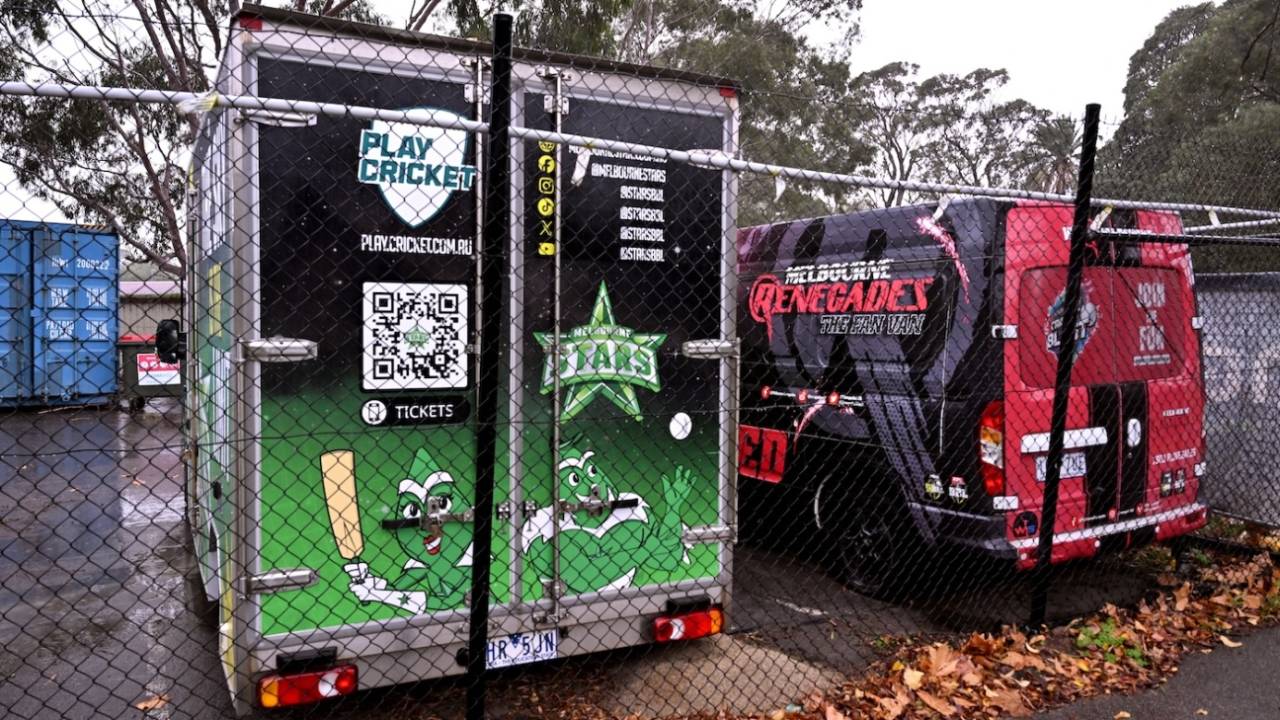
Australian cricket has experienced a period of considerable upheaval and uncertainty, particularly concerning the potential introduction of private investment into the Big Bash League (BBL). The past week has seen a flurry of announcements and reactions, creating a complex situation with many unanswered questions. No official progress has been formally acknowledged, and no definitive steps can be taken until the six state executives and chairs convene with Cricket Australia (CA) in Melbourne next week. A pivotal decision on whether to proceed with the next phase of the privatization plan is anticipated around June 15. This comprehensive overview aims to dissect the known facts, illuminate the areas of ambiguity, and project the potential trajectories for Australian cricket’s premier T20 competition.
Contents
Will there be eight teams in the BBL next season?
Yes, the structure of the Big Bash League for the upcoming season is definitively set to feature eight teams. There has never been any intention on the part of Cricket Australia to implement changes to the competition’s fundamental structure for the 2026-27 season. Should private investment be successfully introduced, its integration into the competition framework is not slated to occur until the 2027-28 season. Consequently, the next BBL season will proceed with an eight-team format, where each team will engage in ten home and away matches, followed by the finals series. Significantly, two of these eight teams will continue to be based in Melbourne, maintaining the city’s dual representation.
So Melbourne Stars and Melbourne Renegades will play next season?
This particular question lies at the very heart of the recent controversy and presents a far more intricate scenario. Cricket Victoria (CV) made a significant announcement on Tuesday, revealing its administrative decision to merge the operations of the two Melbourne-based BBL teams – the Melbourne Stars and Melbourne Renegades – under a singular new brand. This consolidated entity, which would be managed directly by Cricket Victoria, is slated to compete under a different nickname and new team colours. CV’s stated intention is to sell the second team, currently known as the Renegades, to a private investor before the commencement of the 2026-27 season. Under this proposed model, the new private investor would then have the autonomy to rename and rebrand the team, a precedent established by several Hundred franchises in England that were sold last year.
Following a significant public and internal backlash, Cricket Australia chief executive Todd Greenberg addressed the situation on Wednesday. He acknowledged being “aware of Cricket Victoria’s intentions” but critically added that “there’s still plenty of work to be done and nothing has been decided or approved as yet.” Given Cricket Victoria’s decisive administrative moves this week, it appears highly improbable that a team bearing the name Stars will participate in the competition next season. However, no official confirmation has been made. While there is a possibility that a team resembling the Renegades could feature, its exact identity, branding, and operational structure remain largely unknown and subject to future developments.
How will that work?
The practical execution of Cricket Victoria’s proposed merger and sale within the stated timelines raises considerable questions and skepticism. It appears highly challenging for such extensive changes to be implemented within a mere five-month window, particularly before the Women’s Big Bash League (WBBL) season is set to begin. This tight timeframe is compounded by the fact that the hybrid privatisation model itself has not yet received official approval, let alone the complex processes of testing the market with potential buyers and formally managing a license purchase. Despite these formidable logistical hurdles, CV chief executive Nick Cummins remains steadfast in his belief that all these elements can be accomplished within a couple of months. He has asserted that the necessary administrative actions have already been undertaken within the organisation to plan for this ambitious timeline.
Furthermore, a contingency plan has been devised for the Renegades in the event that a prospective buyer cannot assume control of the team in time. Under this plan, a caretaker administration has already been formed and stands ready to operate the team in its current form, as the Melbourne Renegades, ensuring continuity should the primary transition face delays.
Why does Cricket Victoria want to do this?
Cricket Victoria’s motivation behind this significant strategic shift is multi-faceted. Historically, Victoria had always intended to fully sell one of its two BBL teams once a decision was made to embrace privatisation. This strategic move was aimed at enabling CV to operate the remaining team more efficiently, potentially with a 49% private investor, mirroring the intentions of Western Australia and Tasmania with their single teams, the Perth Scorchers and Hobart Hurricanes, respectively. Victoria has consistently faced difficulties in adequately allocating its resources across two distinct BBL franchises.
The state’s financial position was also uniquely impacted by the Covid-19 pandemic, arguably more severely than most other states. This experience has both shaped its current financial outlook and influenced its perspective on the necessary measures to future-proof cricket within the state. The specific reasoning for merging the Stars and Renegades brands under a new, unified name emerged from extensive polling and a series of member focus groups conducted earlier in the year. Cummins explained that Renegades fans indicated they would not transfer their allegiance to the Stars if their team were to be renamed and sold. Conversely, neutral Victorian residents who did not actively support either existing team expressed a preference for backing a team that represented state colours. Therefore, rather than risking the alienation of one dedicated fan base, Cricket Victoria elected to pursue a strategy that attempts to unite both existing fan bases under a new, collective identity.
The timing of this announcement, made two weeks prior to the crucial privatisation vote, was driven by concerns over potential staff and sponsor attrition due to the prevailing uncertainty surrounding the short-term future of the teams. Cummins felt a pressing need to act, particularly after the initial privatisation proposal was rejected in April, leading to prolonged ambiguity.
What’s been the reaction from the other states?
The reaction from the other states has been characterized by varying degrees of strong dissatisfaction, particularly from New South Wales, Queensland, and South Australia. These three states promptly demanded an emergency phone hook-up with Cricket Australia on Thursday to articulate their profound frustration at being completely blindsided by Victoria’s unilateral announcement. They also raised pointed questions about whether Cricket Australia had been complicit in allowing this announcement to be made ahead of the critical state meetings and the vote on whether to advance to the next phase of privatisation. Western Australia and Tasmania also participated in this crucial call, which included CEOs and chairs from all five states, alongside CA chief executive Todd Greenberg and CA chair Mike Baird. Notably, Cricket Victoria was not invited to join this discussion.
Prior to the call, Cummins had dispatched an email to his state counterparts and attempted individual conversations to explain his actions and motivations. Following the emergency phone hook-up, Greenberg released a statement acknowledging the situation, stating,