Contents
A Bold Departure from the Traditional Mirpur Pitch
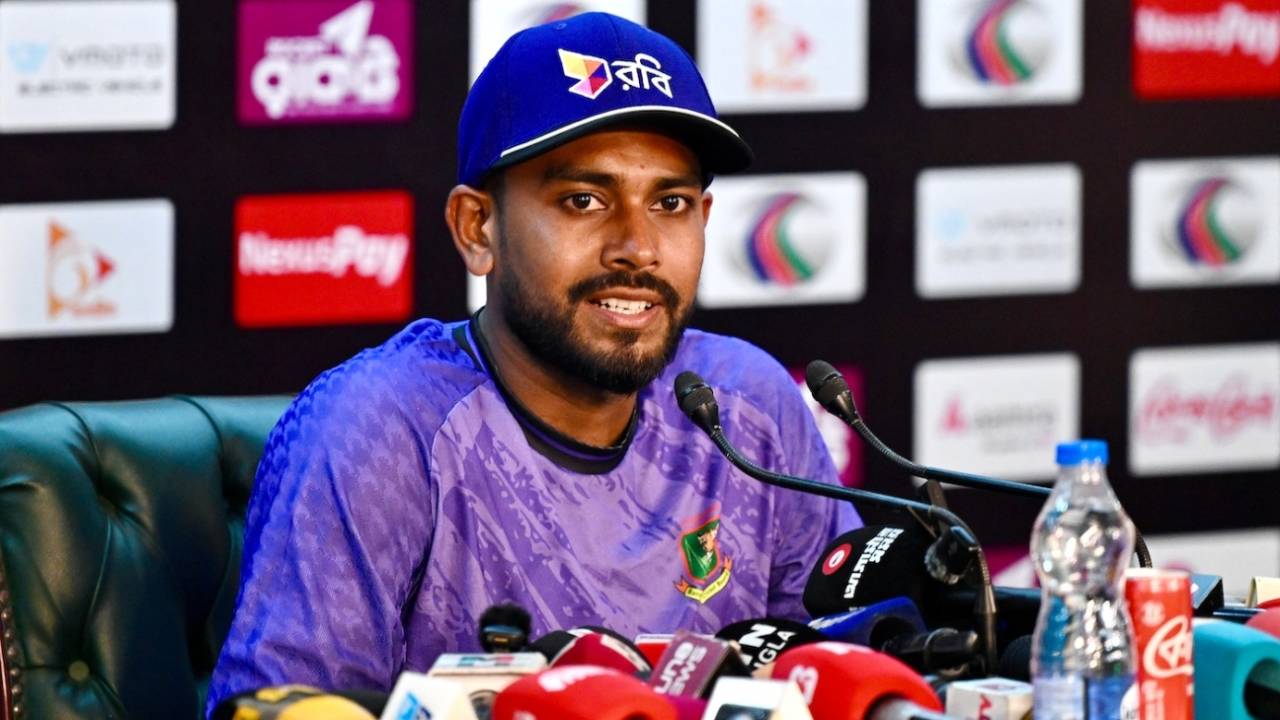
The Shere Bangla National Stadium in Mirpur has long been synonymous with slow, low, and spin-heavy tracks designed to suffocate visiting batters. However, as the covers were peeled back ahead of the first ODI between Bangladesh and Australia, a starkly different picture emerged: a pitch noticeably tinged with a healthy covering of grass. This unexpected sight marks a significant tactical evolution for the hosts. In a bold declaration of intent, the home captain made it clear that they are ready to embrace the challenge, with the key takeaway being that Mehidy confident of taking on Australia on green-tinged pitch to test his team’s true mettle.
According to Mehidy Hasan Miraz, Bangladesh has consciously moved on from relying on rough, slow pitches that merely aid spinners. Instead, the team is actively looking to play on more sporting tracks to help their batters gain crucial confidence. This change in attitude is not a sudden whim; it is the direct result of recent successes on good wickets in Dhaka, most notably the historic Test victory against Pakistan last month. By preparing truer surfaces, Bangladesh hopes to elevate their overall standard of play ahead of major global campaigns.
“Everyone thinks that Mirpur only means a spinning wicket, a poor wicket, but that is not the case anymore,” Mehidy explained. “I think we can produce good wickets in Mirpur as well. We have seen that in the last two or three series. We will try to play on good wickets because if we can win matches on good wickets, if the bowlers bowl well and the batters can score runs, then at the end of the day our confidence is high. Since we have a tournament (the ODI World Cup) ahead of us, if we can gain confidence by playing on good wickets, it will help our team a lot.”
Australia’s Tactical Read and Seam-Heavy Expectations
The Australian camp, led by captain Josh Inglis, has been keeping a close eye on the changing conditions in Mirpur. Rather than relying solely on historical data of spinning Dhaka tracks, the visitors have used Bangladesh’s previous ODI series against New Zealand as their primary reference point. In that series, the wickets offered more grass, allowing the new ball to do some talking and making the contest more seam-friendly than spin-heavy.
“I think we’ve had a look at the New Zealand series that was here,” Inglis noted. “They looked like a bit more grass on the wicket. The new ball tended to do a bit and it was a bit more seam-friendly rather than spin-heavy. So we’ll take that into account, but we’re ready for anything.”
While Australia is missing some of their veteran fast bowlers, Inglis expressed immense faith in the depth of their squad. He highlighted that the younger pace battery has accumulated valuable international experience over the last two years. Players like Xavier Bartlett, Ben Dwarshuis, and particularly Nathan Ellis are expected to shoulder the bowling burden effectively.
“Obviously you take some big guys out of our squad,” Inglis said, “but I think the guys that have been playing a lot over the last couple of years, your Nathan Ellises, Xavier Bartletts, Ben Dwarshuis, they’ve got a fair bit of experience at this level now.” Inglis singled out Ellis as a crucial asset for the tourists, pointing to his versatility across different phases of the innings. “Nathan is a really key player in our side. I think over the last few years, he’s really stood up and taken on whatever role we’ve given him. He’s obviously got all of his change-ups, but he’s incredibly skillful as well and can bowl in all three phases of the game. So I expect him to play a huge part in this series.”
The Threat of Nahid Rana and Bangladesh’s Pace Blueprint
One of the most intriguing subplots of the series is the presence of Bangladesh’s young speed merchant, Nahid Rana. Although Josh Inglis admitted he has not faced Rana first-hand, he has studied enough footage to recognize the threat the young paceman poses. Rana’s combination of height and raw pace makes him a highly exciting prospect and a dangerous opponent on a grass-tinged surface.
“I haven’t seen a hell of a lot of him, but what I have seen, he looks a really good bowler, a really exciting prospect,” Inglis admitted. “He’s tall and he bowls fast, so it’s a pretty nice combination to have. So he’s going to be really tough work for us all.”
Mehidy echoed this excitement, revealing that bringing Rana back into the ODI setup was a key catalyst for rebuilding Bangladesh’s winning mentality since March of this year. Under his leadership, Mehidy prioritized creating a balanced team combination that can compete globally, particularly with the upcoming ODI World Cup in South Africa on the horizon.
“When I first got the captaincy, the situation was a little difficult for me. The team’s condition wasn’t that good either,” Mehidy reflected. “I wanted to create a good team combination and we all know Nahid Rana’s potential. He can bowl fast that too accurately. Since the World Cup is coming up in South Africa, it is very important for us to have fast bowlers in our team. That was how we considered him, and we backed him with confidence and encouragement.”
Resolving Middle-Order Batting Concerns
While the bowling department looks robust, Bangladesh’s primary concern remains their batting, particularly an inconsistent middle order that has struggled over the past 12 months in ODI cricket. However, Mehidy remains optimistic, pointing to strong performances in the domestic List-A tournament, the Dhaka Premier League (DPL), as a sign of revitalization.
Several key players have found their rhythm in the DPL. Towhid Hridoy has been in sensational form, passing the 500-run milestone, while Najmul Hossain Shanto, Mosaddek Hossain, and Litton Das have also shown encouraging signs. This domestic resurgence gives the team management hope that the transition period in the middle order is nearing its end.
“If you look at who played there in the past, many experienced players occupied those positions. Naturally, it takes some time to fill those spots,” Mehidy acknowledged. “I think we have managed to reorganize ourselves. Those in the middle-order are top performers in the DPL. If you look at Towhid Hridoy, Mosaddek Hossain and Litton Das, they are all performing.”
Mosaddek Hossain’s Return and Addressing Rivalry Rumors
A major talking point is the return of Mosaddek Hossain to the ODI squad after a four-year absence. Mehidy believes Mosaddek’s experience and domestic form make this the perfect time for his recall, offering both stability in the middle order and a reliable bowling option.
“Mosaddek has been performing in domestic cricket for many years and has been playing very good cricket as well. He is also in shape,” Mehidy said. “I think this is the right time for him to have been picked, and if he can do well in the role we have envisioned for him, it will be much better for the team.”
Mosaddek’s accurate off-spin is seen as an invaluable asset to complement the main bowling attack. “If we have that kind of option, it will help the team a lot,” Mehidy added. “When you play with five bowlers and also have an extra bowling option, you feel much more confident. He has bowled very well in domestic cricket and he is proven. If he can bowl in the right areas, it will be good, and as a captain I will also be very confident in using him if he bowls well.”
Mehidy also took the opportunity to clear the air regarding rumors of a personal rivalry between himself and Mosaddek. The speculation was fueled last year by comments from chief selector Gazi Ashraf Hossain, who suggested Mosaddek would not find a place in the team while Mehidy was present. Mehidy dismissed these claims, emphasizing their long history of playing together.
“We both played together in the Bangladesh team for many years—39 games to be exact. If you look back, we even played together in the 2019 World Cup, so I do not think this is any different,” Mehidy clarified. “Mosaddek will play his role, and I will play mine. Mosaddek is a batting allrounder, while I am a bowling allrounder. So our roles are different.”
With internal harmony restored, a clear tactical blueprint, and a sporting green-tinged pitch awaiting them, Bangladesh is eager to challenge the world-class Australian side and prove that Mirpur is no longer just a haven for spin.