Mandhana, Harmanpreet fifties but England restrict India to 285 on historic open – Women’s Test at Lord’s

Contents
A Historic Dawn for Women’s Test Cricket at Lord’s
The venerable Lord’s Cricket Ground, a venue synonymous with cricketing history, recently played host to a truly epoch-making event: the first-ever women’s Test match on its hallowed turf. For 142 years, since 1884, Lord’s has been the stage for 150 men’s Tests. Finally, the women’s game carved its indelible mark, heralding a new era at the self-styled Home of Cricket.
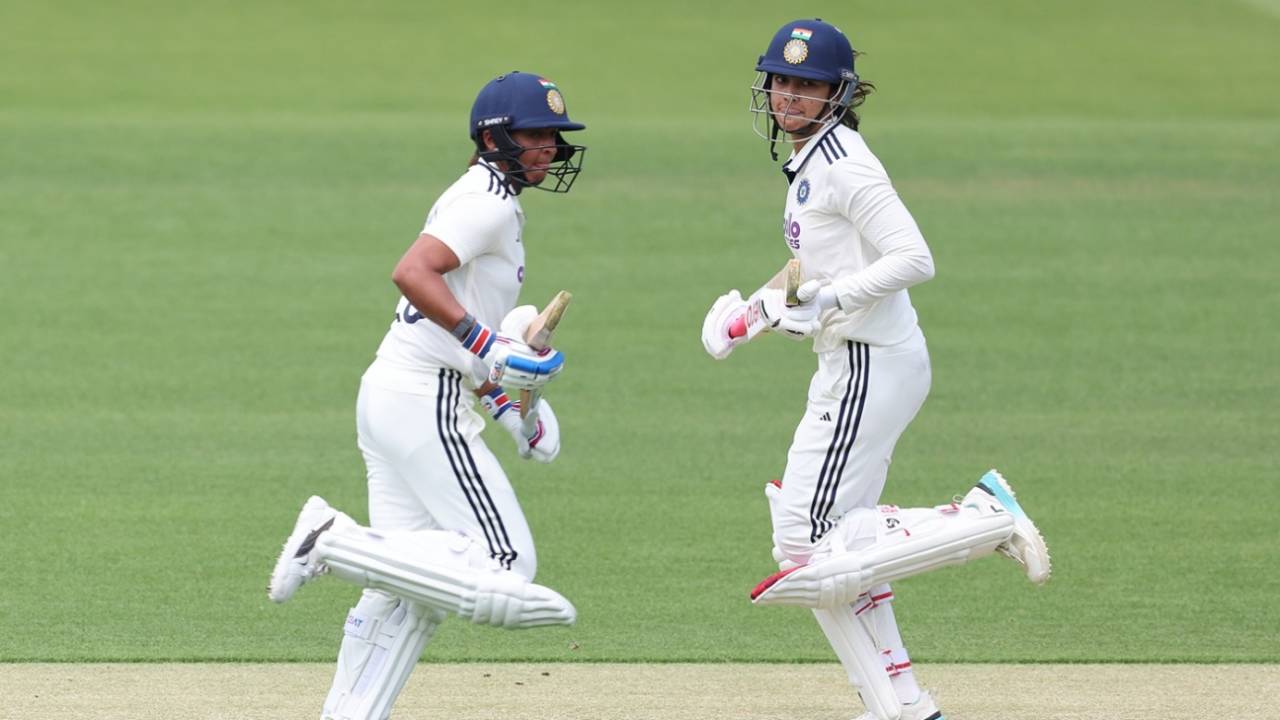
On this historic opening day, India, after winning the toss and electing to bat, saw spirited fifties from Smriti Mandhana and captain Harmanpreet Kaur, along with a crucial contribution from Deepti Sharma. Despite these strong performances, Mandhana, Harmanpreet fifties but England restrict India to 285 on historic open, setting the stage for an intriguing contest. England’s bowlers showcased admirable discipline, ensuring India’s total remained within a manageable range on a pitch that offered some early assistance.
Pioneers and Precedent: A Day of Tributes
The significance of the day transcended the boundaries of the pitch. It was a powerful tribute to the countless giants of the women’s game whose relentless endeavours had paved the way for this moment. Prior to the start of play, a moving ceremony saw over 50 former England players parade through the iconic Long Room and onto the outfield for the national anthems. This remarkable gathering included the legendary Enid Bakewell, an astonishing 85 years young, who, with a bruise on her shin from recent wicketkeeping duties, embodied the enduring spirit of the game. Bakewell had the distinguished honour of ringing the five-minute bell, surrounded by veterans of England’s maiden ODI at Lord’s against Australia in August 1976, almost five decades ago.
The legacy of players like Rachel Heyhoe-Flint, Bakewell’s captain in that 1976 match, resonated profoundly. Heyhoe-Flint, who famously led her team through a side-door to avoid offending traditional MCC members, could scarcely have imagined the scene unfolding, with her official portrait now adorning the Long Room wall. Further cementing this recognition, Bakewell herself unveiled her own painting on the morning of the match. This was one of six new additions to the MCC’s collection, an initiative that instantly trebled the female inventory of one of the world’s most prestigious private art galleries. Other celebrated names commemorated included Mary Duggan, still the leading wicket-taker in women’s Tests with 77 at 13.49, and Myrtle Maclagan, the first woman to take a Test wicket in 1934 and the first to reach three figures. Janette Brittin, renowned for her role in the 1993 World Cup triumph, also received her deserved recognition, ensuring her record is celebrated alongside her more familiar achievements.
England’s Bowling Prowess and India’s Resilience
Against this backdrop of rich history, England captain Nat Sciver-Brunt won the toss and elected to bowl first. The decision, made on a sweltering day with a deceptive tinge of green on the surface, perhaps also reflected a defensive reflex following England’s recent heartbreak in the T20 World Cup final. Nevertheless, the England team embraced the occasion, walking through the Long Room in their whites as a collective, settling into the moment with commendable verve.
The opening overs saw England’s bowlers make an immediate impact. Lauren Filer claimed the first wicket of the contest, a moment of individual brilliance fit to grace any of the 150 men’s Tests held at this ground. Her 72mph delivery, nipping back up the slope, kissed the shoulder of Shafali Verma’s bat, leading to a sharp catch by Amy Jones. This was just the first of several outstanding individual performances by England’s bowling attack.
Lauren Bell delivered another moment to savour with her inswinging, away-seaming delivery that dismissed Yastika Bhatia. Debutant Mady Villiers then made a significant mark by claiming the wicket of India’s captain, Harmanpreet Kaur, for a well-made 58 on the stroke of tea. Villiers’ tossed-up delivery, dipping and gripping through the gate to peg back middle stump, was reminiscent of Michael Vaughan’s memorable off-break to Sachin Tendulkar nearly a quarter-century ago. At 202 for 5, this dismissal ensured England shared the spoils of the first two sessions, preventing India from running away with the game.
India’s innings was anchored by Smriti Mandhana, who demonstrated exceptional poise and skill. Her elegant stroke play and meticulous approach were vital in building India’s total. Despite the early breakthroughs by England, Mandhana’s resilience, coupled with Harmanpreet’s aggressive fifty, provided the backbone of India’s innings. Deepti Sharma also played a crucial role, contributing a valuable 57 runs to ensure India posted a competitive total.
The Challenge of Adaptation in Women’s Cricket
The difficulties faced by both teams between sessions highlighted a broader challenge in women’s cricket. As observed by the soon-to-be-retired Tammy Beaumont in the lead-up to this match, there is an “crazy expectation” for players to rapidly transition from the demands of T20 cricket, as seen in the recent World Cup, to the rarely-played Test format. Women’s teams typically play Test matches once every 18 months if they are fortunate, making this adaptation a significant hurdle. The ability to shift gears from aggressive, fast-paced T20 drills to the patient, strategic demands of Test cricket is a testament to the players’ versatility and dedication.
As the day concluded, England stood at 21 for 1, trailing India’s 285 by 264 runs. The stage is now set for the coming days of this historic encounter, promising more captivating cricket and further milestones to be etched into the annals of Lord’s. This Test match is not merely a game; it is a powerful statement about the growth, recognition, and boundless potential of women’s cricket on the global stage.