‘Incredibly disappointing’ – Associates criticise ICC’s revamped ODI World Cup format
Contents
A Storm Brewing Over Global Cricket Governance
The International Cricket Council (ICC) finds itself at the center of a growing controversy following its decision to overhaul the format of next year’s 50-over World Cup. The move, which introduces a peculiar three-team ‘Super Series’ that could see nations eliminated after just two games, has ignited fierce criticism from players and officials within the Associate member nations. This late-stage alteration to the tournament structure has left captains from Namibia, the Netherlands, and Scotland questioning the integrity of the qualification pathway and the ICC’s commitment to expanding the sport.
The Reality of the ‘Super Series’
While the upcoming World Cup, hosted by South Africa, Zimbabwe, and Namibia, will feature 14 teams—a numerical increase from previous iterations—the structure of the competition has shifted dramatically. Under the new guidelines, the lowest-ranked qualifiers will participate in a preliminary round-robin ‘Super Series.’ For the unfortunate teams at the bottom of this grouping, their World Cup dreams could be extinguished after a mere two matches. This approach stands in stark contrast to the expectations set five years ago, when the tournament was projected to follow a traditional group-stage format.
Players Speak Out Against the Changes
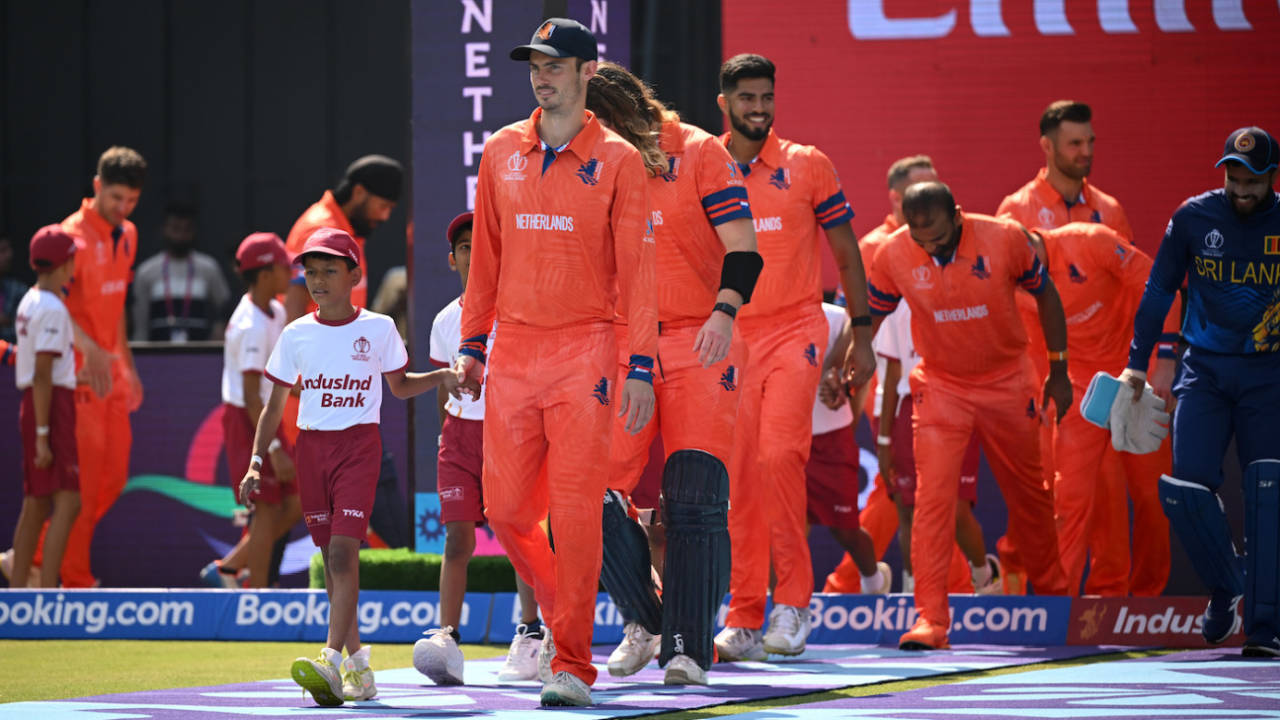
The backlash has been swift and vocal. Netherlands captain Scott Edwards, speaking through the World Cricketers’ Association (WCA), did not mince words regarding the decision. ‘Qualifying for an ODI World Cup is a huge achievement for any country, so when the reality of that opportunity changes after years of planning, it’s incredibly disappointing,’ Edwards remarked. The frustration is compounded by the fact that the Netherlands, having performed admirably in the 2023 World Cup by defeating Full Member nations like South Africa and Bangladesh, have seen a lack of subsequent investment in their development.
Namibia captain Gerhard Erasmus echoed these sentiments, emphasizing that for many, the World Cup is the pinnacle of their professional lives. ‘We all accept that you have to earn the right to be there, but we also want qualification to provide a real opportunity to compete on the biggest stage,’ Erasmus stated. Scotland’s Richie Berrington added that the players feel sidelined, arguing that meaningful consultation is missing when the ICC makes life-altering decisions for those outside the sport’s traditional power structure.
Transparency and the Future of Cricket
The WCA has been a vocal critic of the governing body’s process. Chief Executive Tom Moffat highlighted the difficulty in reconciling the ICC’s stated goals with their recent actions. ‘When commitments are made to the game, qualification pathways are established, and countries and players invest years pursuing those opportunities, significant changes deserve genuine consultation, transparency and a clear explanation,’ Moffat said.
Beyond the immediate controversy, the debate touches on a wider philosophical divide in cricket. While the ICC maintains that T20 cricket is the primary vehicle for global expansion—a claim supported by the recent 20-team T20 World Cup—the Associate nations argue that 50-over cricket remains a vital component of their development. Ireland’s Paul Stirling pointed to the success of the FIFA World Cup as a blueprint for inclusion, suggesting that providing more, rather than fewer, opportunities on the global stage is essential for the health of the game.
The Official Stance
In response to the criticism, the ICC issued a statement claiming that the ‘evolved’ format would lead to a more compelling tournament. The governing body insists that the changes will enhance the fan experience while continuing to offer emerging teams a chance to compete at the highest level. However, for the players currently in the system, these assurances feel like a departure from the spirit of inclusivity. As the cricketing world looks toward the 2027 tournament, the tension between the governing body’s administrative decisions and the aspirations of the global game continues to mount.