Phil Salt’s game-awareness turns tight contest on its head for Welsh Fire

Phil Salt’s Strategic Genius Turns the Tide for Welsh Fire
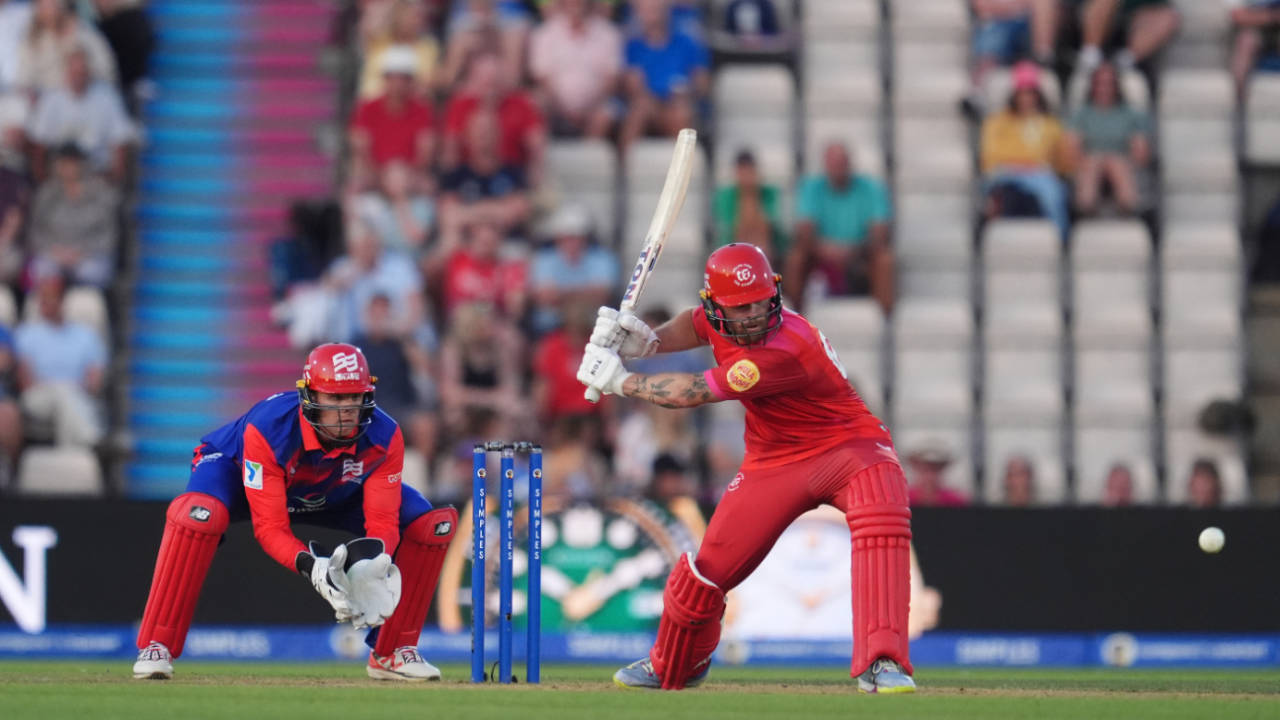
The electrifying atmosphere of The Hundred witnessed a moment of pure strategic brilliance on Wednesday night, as Phil Salt’s acute game-awareness proved to be the decisive factor in Welsh Fire’s hard-fought victory over Southern Brave. On a pitch that offered considerable challenge to batsmen, the contest was finely poised, with Fire requiring 44 runs from the final 33 balls. Salt, then on a cautious 26 off 25 deliveries and yet to find the boundary, suddenly spotted a critical fielding irregularity that would fundamentally alter the course of the match.
The Crucial Observation: A Fielding Error Unveiled
As Luke Wood prepared to bowl, Salt meticulously surveyed the field. His sharp eyes immediately detected an anomaly: Southern Brave had only three fielders positioned inside the 30-yard circle. According to the playing conditions, a minimum of five fielders must remain within this inner circle at all times during a men’s Hundred match, with a maximum of five permitted outside. Brave had six fielders patrolling the outer boundary, clearly violating the rule. Recognizing this strategic blunder by the opposition, Salt immediately treated Wood’s upcoming delivery as a ‘free hit’ in all but name, despite it not being an actual free hit following a prior no-ball. He unleashed a powerful smear shot, sending the ball soaring over the head of a leaping Jofra Archer, who had sprinted in from the long-on boundary rope.
Immediate Action and Game-Changing Impact
Without hesitation, Salt walked down the pitch, his right arm outstretched, signalling to standing umpire Jack Shantry the illegal field placement and demanding a no-ball call. The umpire, after a quick verification, upheld Salt’s appeal, confirming the error. While Salt only managed a single run off the subsequent free hit delivery (which was a genuine free hit due to the no-ball), the impact of his awareness was far greater. Crucially, he then smashed the sixth ball of Wood’s five-ball set – the ‘extra’ delivery earned from the no-ball – for a boundary over mid-off. This single passage of play transformed the equation from a challenging 44 off 33 balls to a much more manageable 35 off the final 30, a significant shift in momentum on a difficult batting surface.
Expert Commentary on the ‘Small Things’
Former West Indies all-rounder and captain, Carlos Brathwaite, commenting on BBC, succinctly captured the essence of the moment. “Someone has fell asleep: three in the circle,” Brathwaite observed. “I think that’s why Salt just swung at it, and he walked straight to the umpire and told him, there’s only three in the circle and it should be a no-ball. Good awareness from him of that.” Brathwaite further elaborated on the ripple effect of this seemingly minor error: “It’s the small things, the very small things… Jof in off the [rope], it went for a boundary. Tom Abell sleeping a little bit at long-off, should have been in the circle. As a result, it’s not only the no-ball, but it’s also four… that’s five. And then you get the extra ball, nine. Nine from what really and truly could and should have been a wicket, and the whole game has changed on its head.” This analysis underscores how a single moment of astute observation can lead to a cascade of benefits, turning a potential wicket-taking opportunity into a nine-run swing.
The Source of the Fielding Error
The fielder whose absence created the illegal field setting was Tom Abell. Abell had entered the game as a substitute fielder for Thomas Rew just minutes earlier, after Rew appeared to roll his ankle while attempting a stop in the deep. This rapid substitution and perhaps a slight lapse in communication or attention to detail by the Southern Brave captain or coaching staff led to the critical oversight that Salt so expertly exploited.
Salt’s Composed Finish
Despite the drama, Salt maintained his composure, ultimately guiding his team to victory. He finished his Welsh Fire debut with an unbeaten 47 runs off just 37 balls, sealing the points by smashing Chris Jordan for a six over midwicket with two balls to spare. Reflecting on the demanding conditions, Salt commented, “Conditions certainly weren’t easy. I feel like that was a good toss to win for us, chasing a target… You always have to give yourself a few balls in low-scoring games like that.” His innings was a testament to both his power-hitting ability and his understanding of how to pace an innings in challenging circumstances.
A Recurring Theme in Cricket
This unusual moment of field placement infringement and its identification by an alert batsman is not entirely unprecedented in the world of cricket. Similar instances have been noted in high-profile matches, including an Australia-England One Day International during the 2013-14 season, and again during T20 Blast Finals Day in 2022. Such occurrences highlight that even at the elite level, meticulous attention to detail from both players and support staff is paramount. The rules regarding field restrictions are designed to balance the contest between bat and ball, and any deviation, if caught, can have profound implications.
The Enduring Power of Game-Awareness
In conclusion, Phil Salt’s game-awareness turns tight contest on its head, serving as a powerful reminder of the multifaceted nature of modern cricket. Beyond pure skill and athleticism, strategic intelligence, an intimate knowledge of the rules, and the ability to act decisively under pressure are invaluable assets. Salt’s singular moment of observation not only secured a vital win for Welsh Fire but also provided a compelling demonstration of how the ‘small things’ can indeed determine the biggest outcomes in the unpredictable drama of a cricket match.