The Urgent Need for a Cricket Museum in Bangladesh

Contents
The Unfulfilled Dream of a Cricket Museum in Bangladesh
May 18 marks International Museum Day — a global celebration of cultural memory and shared history. This year’s theme, “Museums Uniting a Divided World,” couldn’t be more relevant. In times of fragmentation, museums serve as bridges — not just between eras, but between people. Yet, for all its cultural richness, Bangladesh is missing a crucial bridge: a permanent cricket museum.
A Nation United by Cricket, But Not by Memory
Cricket is more than a sport in Bangladesh. It’s a unifying force — one that transcends religion, class, and politics. From village fields to packed stadiums, the game pulses through the nation’s veins. But despite decades of emotional highs, historic upsets, and world-class performances, there is no dedicated space to preserve this legacy.
There are museums for the liberation war, for currency, for military history. But no institution safeguards the bats, jerseys, balls, and stories that define Bangladesh’s cricketing journey. The Bangladesh Cricket Board (BCB) has no official archive. And every day without one, pieces of history slip further from reach.
A Global Culture of Cricketing Heritage
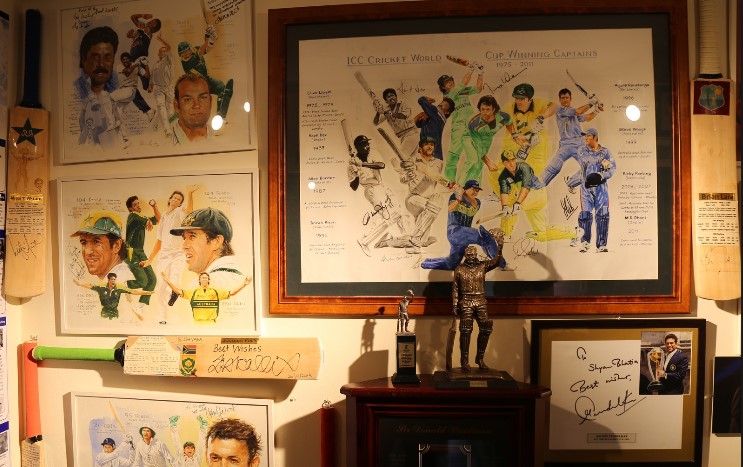
Elsewhere, the world honors its cricketing past with pride. The Marylebone Cricket Club (MCC) opened its iconic museum at Lord’s in 1953, setting a global standard. Australia has the Bradman Museum. Sri Lanka launched its own national cricket museum. Even private collectors are preserving the game’s soul — like the Cricket Club Cafe in Colombo, which displays Sir Garry Sobers’ six-sixes bat, or Dubai’s museum by Sham Bhattia, featuring artifacts from every great, including Shakib Al Hasan.
In Kolkata, historian Boria Majumdar’s Fanatic Sports Museum puts historic letters and match-worn gear within public reach. These spaces do more than display objects — they tell stories, inspire future generations, and affirm national identity.
Bangladesh’s Story, Told Elsewhere
The irony is painful. At Lord’s, Bangladesh’s entire Test history is represented by just one item: the bat Aminul Islam Bulbul used to score the nation’s first Test century. Meanwhile, records of Shakib Al Hasan and Mushfiqur Rahim’s partnerships reside in New Zealand. Moments that electrified millions in Dhaka are preserved — but not in Bangladesh.
Temporary Exhibitions, Lasting Impact
Efforts have been made. In 2011, Bangladesh’s first cricket memorabilia exhibition was held at the Russian Cultural Centre. Later exhibitions at the National Museum and Drik Gallery featured signed bats from Tendulkar, Lara, and Sobers, match balls from Warne and Wasim Akram, and historic gear from local legends like Jewel and Tamim Iqbal.
Jerseys from Shakib, Mushfiq, Litton Das, and Shanto traced the evolution of the national team. For a few days, fans could touch the tangible history of their heroes. The public response was overwhelming — yet each exhibition ended with artifacts vanishing back into storage.
The Time to Act Is Now
A permanent museum doesn’t need to be grand from the start. It could begin as a dedicated wing at the Sher-e-Bangla National Stadium, growing over time through public support, ticketing, and sports tourism. What’s missing isn’t memorabilia, passion, or expertise — it’s political and institutional will.
To the BCB and the Ministry of Youth and Sports: the materials are ready. The curators are willing. The public is eager. All that remains is a space.
Picasso once said, “Give me a museum and I will fill it.” That promise stands for Bangladesh. Give us a cricket museum — and we will fill it with history, heart, and national pride.