BCB wants Mushfiqur Rahim to join coaching after retirement: A Future Beyond The Wickets

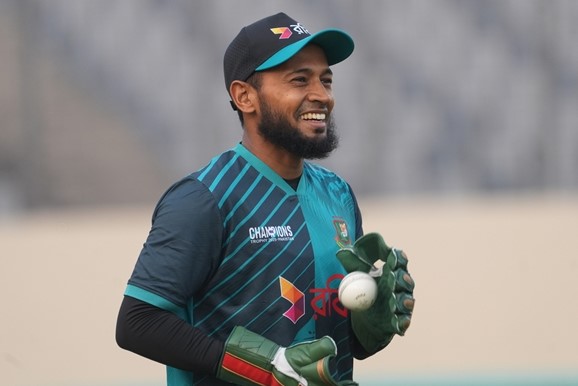
Even as some of Bangladesh’s cricketing stalwarts continue their playing careers, the Bangladesh Cricket Board (BCB) is strategically planning for the future, particularly regarding the post-playing contributions of its most experienced talents. While Mahmudullah Riyad has already begun an advisory role with Bangladesh’s youth and ‘A’ teams, signaling a clear path for former international players, the BCB now hopes that another icon, Mushfiqur Rahim, will eventually follow a similar trajectory.
Unlike Mahmudullah, who, despite playing domestic cricket, has already embarked on his coaching journey, Mushfiqur Rahim remains a central and active figure in Bangladesh cricket across various formats. At 39 years old, he continues to be a key player in the Bangladesh Premier League (BPL), the Dhaka Premier League (DPL), and prominently features in international cricket, especially in Test matches. His consistent performance and enduring presence underscore his immense value to the team. However, with the natural progression of a long and illustrious career, the conversation around his eventual retirement and subsequent role within the cricketing ecosystem becomes increasingly pertinent.
Contents
- 1 Mushfiqur Rahim: A Pillar of Bangladeshi Cricket and Future Coaching Prospect
- 2 BCB’s Vision: Leveraging Experience for Future Generations
- 3 The Board’s Stance: Mushfiqur’s Choice is Paramount
- 4 Strengthening Coaching Foundations: A New Technical Committee
- 5 Elevating Regional Coaching Standards and Compensation
Mushfiqur Rahim: A Pillar of Bangladeshi Cricket and Future Coaching Prospect
Mushfiqur Rahim’s career has been defined by his exceptional skills as a wicketkeeper-batsman, his astute understanding of the game, and his unwavering leadership qualities. His tenure at the highest level has provided him with an unparalleled perspective on modern cricket, its evolution, and the demands placed upon players. It is precisely this wealth of experience, coupled with his deep cricketing knowledge, that the BCB views as an invaluable resource for the next generation of Bangladeshi cricketers. The board has proactively communicated its desire to integrate Mushfiqur into a coaching or advisory capacity once he concludes his international playing career, recognizing that such a transition would provide immense benefits to the national setup.
BCB’s Vision: Leveraging Experience for Future Generations
The proactive approach taken by the BCB reflects a broader strategic initiative to harness the accumulated wisdom of its most accomplished players. The board believes that individuals who have dedicated decades to international cricket possess unique insights that cannot be replicated through traditional coaching courses alone. Their firsthand experience of high-pressure situations, diverse cricketing conditions, and the intricacies of elite performance offers a practical, invaluable lesson for aspiring cricketers. This philosophy is clearly articulated by BCB vice-president Fahim Sinha, who emphasized the board’s responsibility to facilitate such transitions. “Mahmudullah, Mushfiq, those who have played at this level in our country, who played international cricket for so many years at the top level and their caliber, presenting that experience to our players, making that arrangement, is our responsibility,” Sinha stated, highlighting the strategic importance of retaining these luminaries within the cricketing framework.
The Board’s Stance: Mushfiqur’s Choice is Paramount
While the BCB’s intent is clear and enthusiastic, the board fully acknowledges that the ultimate decision rests with Mushfiqur Rahim himself. The success of any potential coaching role hinges entirely on his personal interest and commitment to contribute in this new capacity. The board respects his autonomy and understands that any transition must be driven by his genuine passion for coaching and developing future talent. Fahim Sinha reiterated this sentiment, underscoring the BCB’s earnest hope to secure Mushfiqur’s involvement. “If Mushfiq has a coaching interest or interested in working with cricket, with the experience he has of playing international cricket for so many years, or the progress in modern-day cricket that he has witnessed with his own eyes throughout his entire career, we will definitely want Mushfiq to come here and contribute, it will be our failure if we cannot bring him in,” he added, stressing the significance of his potential contribution and the board’s determination to integrate him.
Strengthening Coaching Foundations: A New Technical Committee
Beyond individual player transitions, the BCB is simultaneously undertaking significant reforms to enhance the overall quality and professionalism of coaching across Bangladesh. A pivotal step in this direction is the formation of a three-member technical committee. This committee, comprising esteemed cricketing figures Mohammad Salahuddin, Mizanur Rahman Babul, and Sohel Islam, is tasked with the critical responsibility of elevating coaching standards at all levels, particularly focusing on regional coaches. Their primary mandate will be to implement and oversee a new Key Performance Indicator (KPI) system for evaluating coaches, ensuring accountability and promoting continuous improvement. Fahim Sinha elaborated on the committee’s scope: “We are forming a three-member technical committee to evaluate the performance of the local coaches and the technical evaluation will be done by our Salahuddin (Mohammad) bhai, our Mizanur Rahman Babul bhai, and Sohel (Islam) bhai. There will be a workshop for the coaches, where the coaches will be taught KPI implementation, as soon as we implement this straight from that very day an evaluation process will be created for them to evaluate their performances. We need to monitor them and those who are senior coaches will monitor the district and divisional coaches, we will train a few such people and bring all the coaches under our BCB under a KPI.” This structured approach aims to professionalize coaching, ensuring a consistent benchmark for performance and development.
Elevating Regional Coaching Standards and Compensation
Recognizing that motivation and quality are inextricably linked to fair compensation, the BCB is also making substantial plans to increase the salaries of regional coaches. This initiative is designed to attract and retain high-caliber coaching talent, especially at the grassroots level where foundational skills are imparted. According to Fahim Sinha, district coaches could see their salaries increase by as much as 70 percent under a proposed new grading structure. This significant raise addresses a long-standing issue of inadequate remuneration, which has often hindered the professional growth and commitment of coaches. “As for the salary, the salary grade, we will reshuffle those things a bit, we are planning an initiative which, I don’t know if it’s right for me to say right now, we will raise the district coaches’ salary by at least 70% from what they are getting now, there will be three grades there,” Sinha revealed. He further explained the rationale: “Upon showing proper qualification, right after entering, they will get a good raise, because our current structure, the salary they are drawing now, it is absolutely insufficient, this is very low, since increments haven’t happened properly for a long time, appraisals haven’t happened properly, which is why it was stuck in one place for a long time, so we will start from here, by introducing a grading system, we will re-evaluate district coaches, divisional coaches, and central coaches, everyone’s, and they will sit in their respective grades according to their qualifications, those who don’t have qualification won’t say, the freedom will remain with our technical committee, those who will evaluate.” This comprehensive overhaul of the compensation and grading system underscores the BCB’s commitment to fostering a professional, well-compensated, and merit-based coaching environment across the nation.
These concerted efforts by the Bangladesh Cricket Board to both integrate seasoned players like Mushfiqur Rahim into future coaching roles and to systematically improve the standard and remuneration of its coaching staff signify a robust long-term vision for sustainable cricketing excellence. By investing in its human capital, from top-tier former players to grassroots coaches, Bangladesh cricket is poised to cultivate a stronger, more resilient foundation for its future success on the international stage.