
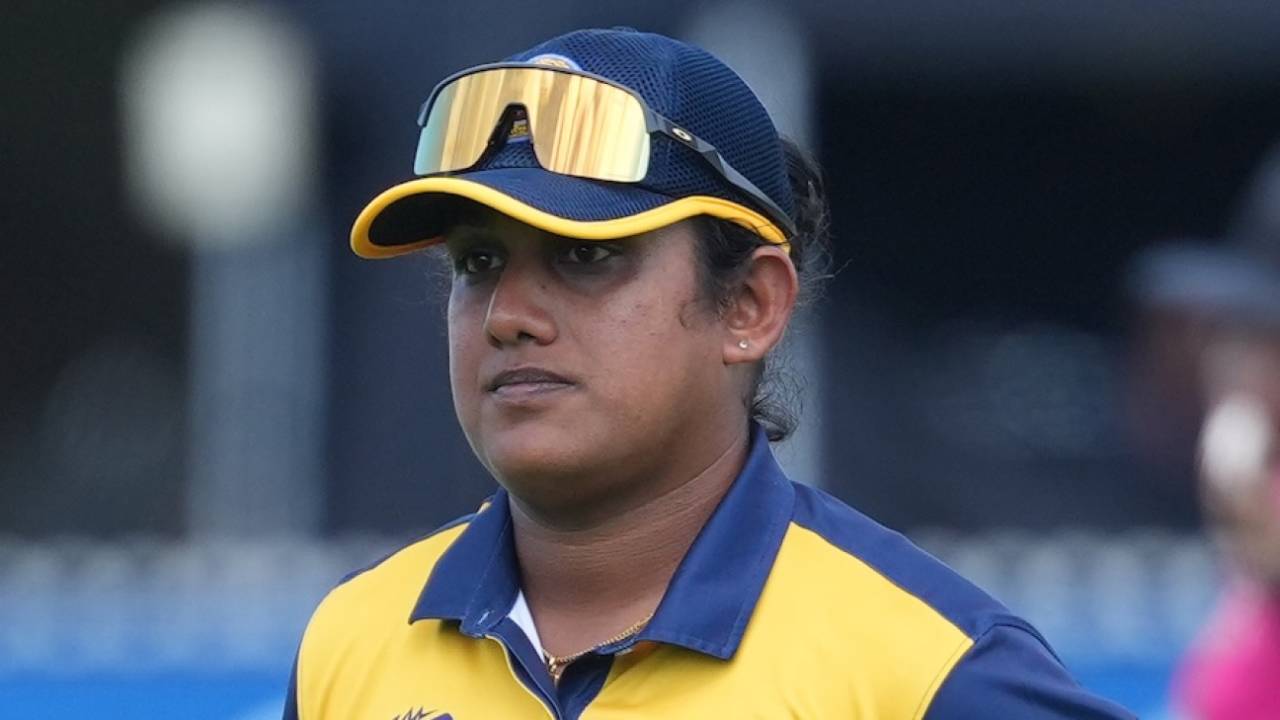
The usually formidable Chamari Athapaththu found herself at a crossroads of emotion and introspection after Sri Lanka’s disheartening loss to the West Indies in Bristol. With her team now languishing in fifth place out of six in Group 2, their aspirations for a coveted spot in the semi-finals of the 2026 Women’s T20 World Cup hang precariously. The weight of this situation prompted a remarkably candid admission from Athapaththu, who unequivocally stated, “I think I’m a failure as a captain.” This sentiment resonated deeply, highlighting the immense pressure and personal stakes involved in leading a national side on the global stage.
The match itself was a somber affair for Sri Lanka, particularly for Athapaththu. She managed a mere 2 runs as her team crumbled to a paltry total of 98. The West Indies chased down this target with relative ease, securing a five-wicket victory with 23 balls to spare. While Sri Lanka currently holds two wins from three games, the path ahead is fraught with challenges. England and West Indies have maintained perfect records, winning all three of their matches, while New Zealand and Scotland hold a superior net run rate. For Athapaththu’s squad, a dramatic and immediate upturn in fortune is not just desired, but absolutely essential to navigate their way out of the group stages.
Contents
A Captain’s Burden: “Sadness Beyond Words”
Athapaththu, a veteran of ten T20 World Cups and a player with an eighteen-year tenure in the national team, spoke with a profound sense of sadness after the defeat. “Actually, it’s a sadness beyond words,” she confessed, her voice undoubtedly heavy with disappointment. Her long and distinguished career has seen many personal accolades, but the elusive goal of leading her team to a World Cup semi-final has remained unfulfilled. “I could never get a chance to take my team into a semi-final of a World Cup,” she lamented, articulating a deep-seated regret that transcends individual achievements.
This contrast between personal triumph and team success is a recurring theme in the careers of many elite athletes, and for Athapaththu, it has clearly become a source of considerable anguish. “Even though I have achieved many things personally, I think I’m a failure as a captain, because I think that’s big pain for a player. Actually, now I have to be with that pain,” she elaborated, laying bare the emotional toll that captaincy exacts. Her words underscore the profound responsibility a captain feels, where the team’s collective fortunes often overshadow any individual brilliance.
Embracing Responsibility and Regret
In her moment of vulnerability, Athapaththu was also quick to shoulder the blame, a hallmark of true leadership. She refused to point fingers, instead turning the spotlight on her own performance and decision-making. “I think I tried my best, I think I should have played more responsible than this and if I have played more responsible than this today, we could have won this match today. So, I regret that,” she stated unequivocally. This self-critique is not born of weakness, but rather a fierce commitment to her role and her team.
Her seasoned perspective as both a player and captain led her to emphasize her greater responsibility. “Especially I don’t like to blame anyone and I think I have more responsibility as a player, as the captain of the team and as a player with more experience,” Athapaththu explained. This mature understanding of her position, coupled with the palpable regret, painted a picture of a leader grappling with the immediate aftermath of a significant setback. The finality in her statement, “So, I’m very sad, I feel like I lost my last chance,” hints at the immense personal investment she has made over nearly two decades in the sport.
The Future: Age, Fitness, and an Unwritten Chapter
At 36 years old, Athapaththu has participated in every T20 World Cup since its inception. The next edition is scheduled for Pakistan in 2028, by which time she would be approaching 40. The question of her continued involvement in international cricket is naturally surfacing. When asked about playing in the next T20 World Cup, Chamari responded with thoughtful caution, “For now, I can’t give any explanation about that, because with my age, now I’m 36 years old.”
Her focus, for now, remains on maintaining her physical condition and cricketing prowess. “So, with fitness and all, that’s being decided. So, I try my best to keep my physical fitness in a good level, and to keep my skills in a high level,” she affirmed. Ultimately, the decision will not solely rest on her individual desire but also on the needs of the team and her sustained performance. “If the team wants, I will play in the future, but with my performance level and fitness level, it will be decided if I play or not.” This statement underscores the professionalism and dedication that have defined her long and impactful career.
The Road Ahead for Sri Lanka
Despite the recent setback, Sri Lanka’s journey in the tournament is not yet over. They have two crucial Group 2 fixtures remaining that will determine their fate. Their next challenge is against Ireland in Bristol on June 23, followed by a match against Scotland in Manchester on June 26. These encounters present an opportunity for Athapaththu and her team to rally, demonstrate resilience, and perhaps, against the odds, engineer the dramatic turnaround needed to keep their semi-final hopes alive. The emotional weight carried by their captain is a testament to the passion and dedication within the squad, and how they respond to this adversity will be a true measure of their character.