Chase: ‘We could have made room for an extra spinner’ – WI vs PAK

Contents
Team Selection and the Queen’s Park Oval Surface
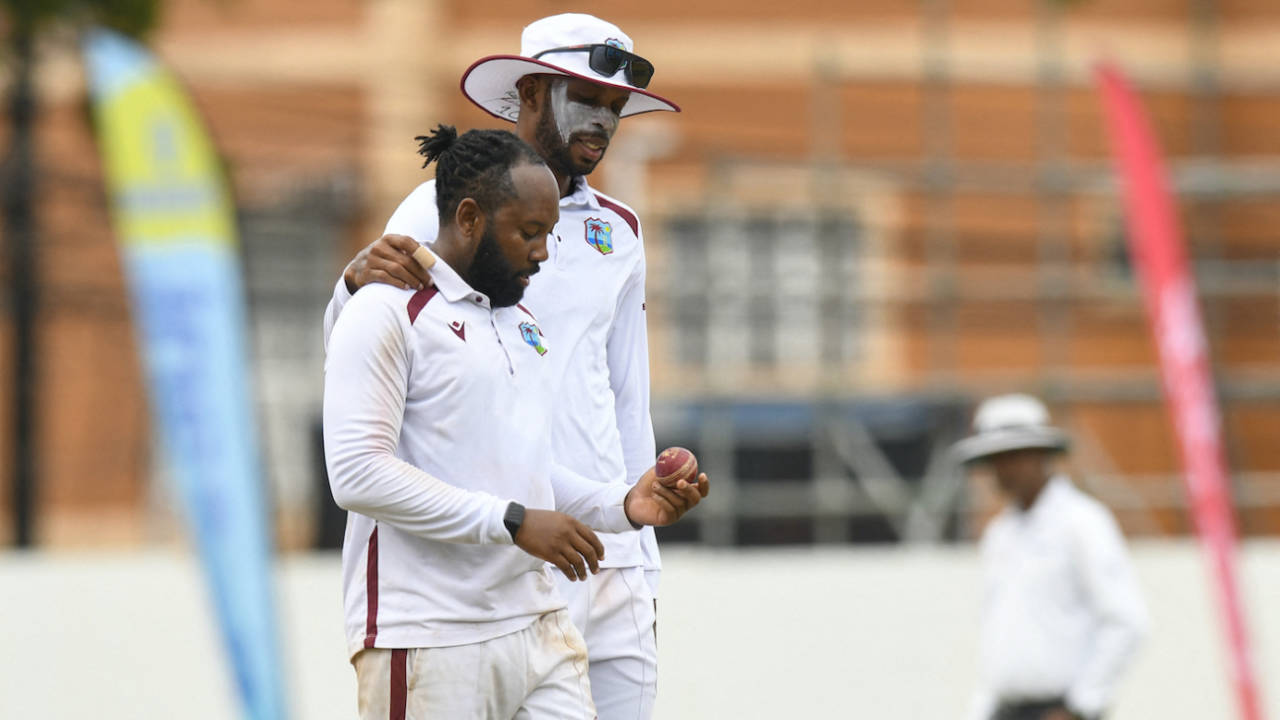
West Indies captain Roston Chase conceded that team balance and tactical execution contributed significantly to his side’s eight-wicket defeat against Pakistan in the second Test at Queen’s Park Oval in Port of Spain. The result allowed Pakistan to level the two-match Test series 1-1, highlighting clear challenges in the hosts’ bowling combination on a surface that proved exceptionally friendly to slow bowlers. Over the duration of the match, spinners dominated the contest, taking 20 of the 28 wickets to fall to bowlers. Despite the conditions offering early and consistent assistance to spin, West Indies selected only one frontline specialist spinner in left-armer Jomel Warrican, whereas Pakistan fielded two frontline options.
Addressing the post-match press conference, Chase explained how a pre-existing finger injury severely restricted his own bowling output, compounding the side’s balance issues. Under normal circumstances, Chase would have provided sustained offspin support to Warrican, but the ailment forced him into a minor role with the ball throughout the match.
“I don’t want to say we misread the pitch, but we didn’t think that it was going to spin as much from so early,” Chase stated. “So I think that that is where the problem came in. And also my injury, I think that we thought I would have been able to bowl a lot more, but rushing back from the injury a bit too quickly, and I was still in some pain in terms of bowling. So I think that was a bit of a dilemma for us.”
Evaluating Squad Options and Role Responsibilities
Reflecting on potential adjustments, Chase noted that uncapped spinner Joshua Bishop was available in the squad as another frontline bowling option. However, Chase emphasized that adding a secondary spinner would not have come at the expense of his own spot in the XI, given his primary responsibility as a specialist batsman and leader.
“Captaining the side, I would never leave myself out to play anyone else,” Chase said. “If I am outright injured and can’t play, then I would sit out. But once I can still play as a batsman, I will always play. But I do think that we could have made room for an extra spinner, but it wouldn’t have been [instead of] myself at all.”
Pace Attack Strategy and Tactical Adaptation
In addition to squad composition, Chase highlighted issues with how long the fast-bowling unit took to adapt to the pitch at Queen’s Park Oval. Unlike the opening Test at the Brian Lara Stadium in Tarouba, which offered far greater assistance to seamers, the surface in Port of Spain required patient line-and-length bowling designed to dry up run scoring and build pressure over long periods. Instead, the pace attack attempted to blast out the opposition, allowing Pakistan to score freely during their first innings. By the close of day two, Pakistan had reached 266 for 2 at a rate of over four runs per over in response to West Indies’ first-innings total of 344.
“I think that we took a bit too long to adapt to the conditions,” Chase acknowledged. “The wicket wasn’t one that was assisting the fast bowlers as much like [the] Brian Lara [Stadium in Tarouba, which hosted the first Test]. So I think it’s a case where we needed to be more patient and just try to defend one side of the wicket and just try to squeeze them as much as possible into making a mistake, but we still tried to blast them out per se, and I think that gave them too many runs before we really locked it down and stuck to the plan and were a bit more disciplined.”
Impact of Justin Greaves’ Injury and Pitch Preferences
The West Indian bowling resources suffered a further setback when seam-bowling allrounder Justin Greaves sustained a leg injury while batting during the first innings. Greaves, who was named Player of the Match in the first Test after taking seven wickets including a five-wicket haul, was unable to bowl in Port of Spain. Chase noted that Greaves’ absence disrupted the team’s ability to maintain control.
“Yeah, it was a big miss for me because when things tend to start straying away, Justin is a guy that I can always call on to come and pull it back,” Chase said. “He’s that guy that he’s more of a holding bowler, but he holds so well that it creates so much pressure that he tends to get wickets as well, by batsmen making mistakes, and we saw it in the last game – once he gets going, he’s really hard to stop. So, yeah, it was a big miss for us as well with that injury. So I just hope that he can get back to full fitness as quick as possible.”
While acknowledging execution and selection flaws, Chase admitted he would have preferred a pitch offering more assistance to pace bowlers to suit the team’s core strengths. “Obviously with a bowling attack like ours, the strength is in the pace bowling,” Chase said. “I would have liked obviously a bit more grass and something a bit more advantageous to the fast bowlers, but we didn’t get that, and we saw it from even before the game started, so we knew what was in front of us but I would still like to have a pitch that would have assisted the fast bowlers a bit more.”
Standout Displays and the Road Ahead
Despite the team’s struggles, Jomel Warrican earned strong praise for a tireless effort with the ball. Warrican bowled 46 of the 115 overs in Pakistan’s first innings, finishing with a six-wicket haul. “Yeah, I thought his effort was a magnificent one,” Chase said. “I mean, he bowled really long for those wickets, and I thought his patience was up to par. I thought he really stuck to the task and just put the ball in front of the batsman, put the ball in front of the batsman and allowed the pitch to work for him, and he finally reaped the reward. So I want to say congrats to Jomel Warrican and especially for a guy who hasn’t been playing as many matches given that we tend to go with the pacers more often than not.”
West Indies’ next Test assignment is a two-match tour of Bangladesh scheduled for October-November, marking their final series of the 2025-27 World Test Championship cycle. Veteran fast bowler Kemar Roach, who reached 300 Test wickets in the preceding series against Sri Lanka, remains a vital figure for the side. Despite Roach turning 38 and playing a single format, Chase voiced his desire for the senior bowler to continue his career.
“Kemar Roach, he’s a legend,” Chase concluded. “I will always encourage Kemar to keep going. I think Kemar is kind of a guy that, he knows himself, he knows his limits, he knows his body. And for me, if I had to say it, I think it would be up to Kemar for when he’s ready to call it quits. He’s been doing very well for us – past 300 wickets, he still has a lot to offer. I will always encourage Kemar to keep going.”