Ibrahim 84 and Rashid six-for carry Afghanistan to victory in second ODI

Contents
Afghanistan Clinch Decisive Win Against Ireland, Take Series Lead
The second One-Day International between Afghanistan and Ireland, played at Bready, saw Afghanistan deliver a powerful performance to secure a 92-run victory. This crucial win puts Afghanistan 1-0 up in the five-match series, a significant development after the first ODI was unfortunately washed out without a ball being bowled. The match, reduced to 47 overs a side due to a wet outfield, witnessed stellar individual efforts, most notably from opener Ibrahim Zadran with a magnificent 84 and the sensational leg-spinner Rashid Khan, who claimed an impressive six wickets for just 34 runs.
Ibrahim Zadran Anchors Afghanistan’s Batting Display
Winning the toss and electing to bat first, Afghanistan posted a formidable total of 299 for 8 in their allotted 47 overs. The innings was anchored by a superb knock from opener Ibrahim Zadran, who played with composure and aggression to score 84 runs. His innings provided the stability and platform necessary for Afghanistan to reach a challenging target. Zadran’s ability to rotate the strike and find boundaries kept the scoreboard ticking, frustrating the Irish bowlers.
He was well-supported by other key contributions. Sediqullah Atal chipped in with a valuable 45 runs, demonstrating his burgeoning talent and partnership-building skills. Towards the latter part of the innings, captain Hashmatullah Shahidi played a crucial unbeaten cameo of 36 runs, ensuring that Afghanistan capitalized on the foundation laid by the top order and pushed their total close to the 300-run mark. The Afghan batsmen showed resilience and adaptability, particularly after the match was shortened, adjusting their strategy to maximize runs.
On the bowling front for Ireland, Mark Adair was the pick of the bowlers, returning figures of 2 for 40. While he managed to pick up crucial wickets, the overall Irish bowling effort struggled to contain the Afghan batsmen, especially in the middle overs, allowing them to accelerate effectively.
Ireland’s Promising Start Dented by Rashid Khan
Chasing a revised target of 300 in 47 overs, Ireland began their innings with a sense of purpose. Openers Andy Balbirnie and Cade Carmichael looked to build a solid foundation, and for a period, they seemed to be in control. The pair forged an emerging 72-run partnership, injecting momentum into the Irish chase. Carmichael, in particular, displayed aggressive intent, plundering 4, 6, 6, 4 off Mohammed Saleem in a single over (the 14th over), signaling Ireland’s determination to keep pace with the required run rate.
However, the introduction of Afghanistan’s spin wizard, Rashid Khan, quickly turned the tide. Rashid broke the threatening partnership by having Andy Balbirnie caught behind for 36. This wicket came at a critical juncture, just when Ireland appeared to be gaining significant momentum, and it served as a stark reminder of Rashid’s ability to deliver breakthroughs.
Rashid Strikes Twice as Ireland Stumble
Rashid wasn’t done yet. In his very next over, he struck another crucial blow, dismissing Harry Tector, who was also caught behind, albeit on the second attempt. These two quick wickets from Rashid Khan severely dented Ireland’s progress, shifting the momentum firmly back in Afghanistan’s favor. Despite these setbacks, Ireland attempted to rebuild, with Cade Carmichael continuing his impressive innings and Lorcan Tucker joining him at the crease. They managed to put together a 38-run stand, offering a glimmer of hope for the home side.
The Freak Dismissal and Ireland’s Dramatic Collapse
The turning point in Ireland’s innings, and arguably the match, came with the freak dismissal of Lorcan Tucker. With the game reduced to 47 overs a side and Ireland requiring another 156 runs from 137 balls with seven wickets still in hand, Mohammed Saleem appealed for an LBW dismissal against Tucker. Though the umpire turned down the appeal, Tucker attempted a quick single. It was at this crucial moment that Sediqullah Atal, fielding at point, executed a brilliant direct hit, catching Tucker well short of his ground.
Tucker’s run-out marked the beginning of a dramatic collapse for Ireland. What followed was a stunning display of Afghan bowling and fielding as Ireland lost an astonishing 7 wickets for just 63 runs. The pressure mounted, and the Irish middle and lower order crumbled under the relentless attack, failing to form significant partnerships that could revive their chase.
Rashid Khan Completes Third ODI Six-for, Seals Victory
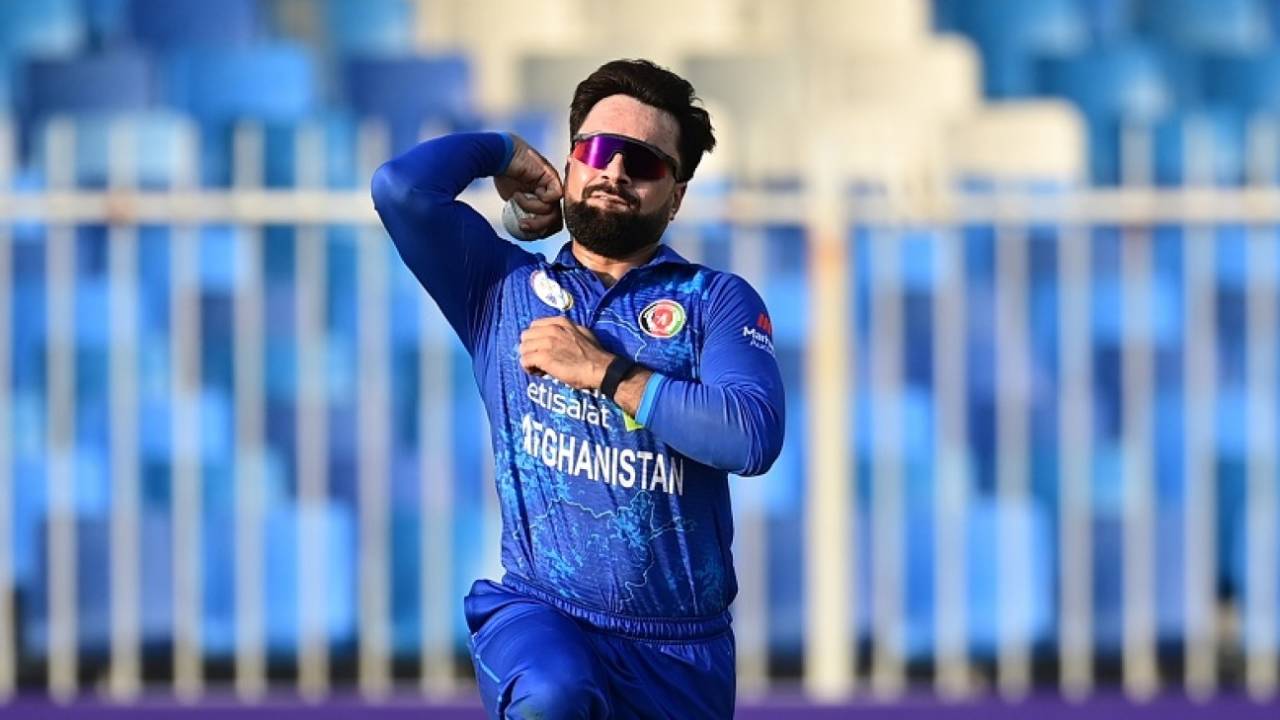
Leading the charge in this devastating collapse was none other than Rashid Khan. After his initial two breakthroughs, Rashid returned to rip through the Irish batting lineup, claiming four more wickets in quick succession. His spellbinding performance saw him finish with exceptional figures of 6 for 34, marking his third six-for in One-Day Internationals – a testament to his world-class skill and consistent match-winning ability. Each wicket he took further demoralized the Irish side, making their task increasingly insurmountable.
Ireland eventually succumbed to the pressure, being bowled out for 207 runs. Afghanistan’s disciplined bowling and sharp fielding ensured they maintained control throughout, ultimately securing a comprehensive 92-run victory. The margin of victory underscored the dominance Afghanistan exhibited, particularly in the latter half of Ireland’s innings.
Series Advantage for Afghanistan
This resounding win not only gives Afghanistan a 1-0 lead in the five-match series but also provides a significant psychological advantage heading into the remaining matches. The combination of strong batting performances, led by Ibrahim Zadran, and the unparalleled bowling artistry of Rashid Khan proved too much for Ireland to handle on the day. As the series progresses, Ireland will need to regroup and find answers to Afghanistan’s potent attack, while Afghanistan will be keen to maintain their winning momentum and consolidate their position in what promises to be an engaging bilateral contest.