Mooney, spinners take Australia to eighth T20 World Cup final with Dominant Semi-Final Win

Contents
Mooney, Spinners Take Australia to Eighth T20 World Cup Final
The much-anticipated first semi-final of the T20 World Cup saw Australia deliver a performance brimming with confidence and strategic brilliance. Chasing a modest target of 126 runs set by the West Indies, the Australian batting lineup, spearheaded by the unflappable Beth Mooney, made light work of the chase. Their comprehensive eight-wicket victory, achieved with a remarkable seven overs to spare, underscored their dominance and firmly cemented their place in the tournament’s final for an unprecedented eighth time.
Australia’s Clinical Performance Secures Final Berth
At the heart of Australia’s successful pursuit was Beth Mooney, whose unbeaten 61 runs off just 36 deliveries was a testament to her skill and composure under pressure. Mooney’s innings was a blend of aggressive stroke play and astute shot selection, ensuring that Australia maintained a healthy run rate and never allowed the West Indies bowlers to gain a foothold. Her ability to accelerate at will, combined with her steadfast presence at the crease, drained any hope the West Indies might have harbored of defending their total.
The chase was not entirely without its moments of concern for Australia. Early in their innings, Ellyse Perry, who had been one of the most in-form batters in the tournament alongside England’s Danni Wyatt-Hodge, was forced to retire hurt due to a quadricep issue. This setback could have potentially rattled a lesser side, but Australia’s deep batting lineup and Mooney’s assured presence ensured there was no significant disruption to their momentum. Other batters stepped up to support Mooney, rotating the strike and finding boundaries when necessary, to keep the scoreboard ticking effortlessly.
Spinners Lay the Foundation with Restrictive Bowling
Before Mooney’s heroics with the bat, it was Australia’s spin contingent that truly set the tone for the match, delivering a masterclass in restrictive bowling. Their collective efforts ensured that the West Indies’ innings never truly gained momentum, effectively stifling their scoring opportunities and picking up crucial wickets at regular intervals.
Ashleigh Gardner Leads the Charge
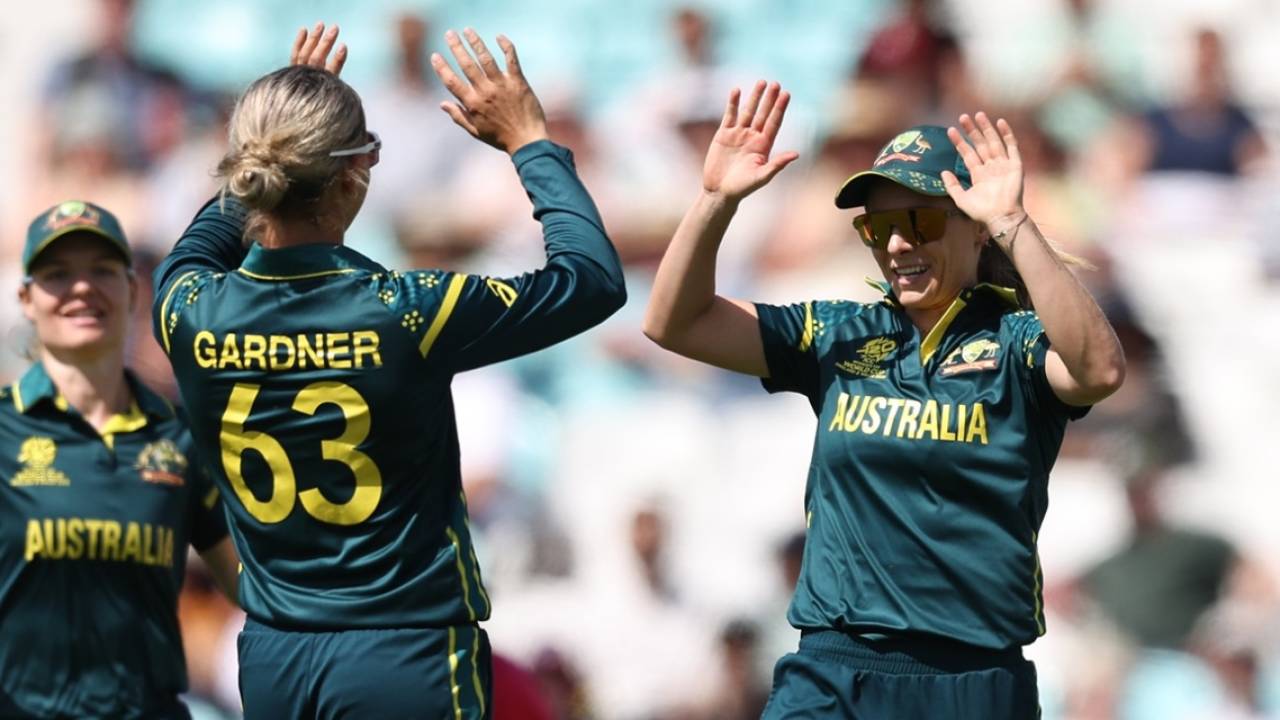
Leading this charge was the off-spinner Ashleigh Gardner, whose spell was nothing short of exceptional. Gardner’s four overs yielded a miserly 2 for 13, figures that perfectly illustrate her control and ability to put the squeeze on the opposition. Her variations and accuracy made it incredibly difficult for the West Indies batters to rotate the strike or find the boundaries, building immense pressure that ultimately led to wickets.
Wareham and Molineux Provide Crucial Support
Complementing Gardner’s brilliance were leg-spinner Georgia Wareham and left-armer Sophie Molineux, both of whom contributed significantly with two wickets apiece. Wareham’s guile and flight consistently troubled the West Indies middle order, while Molineux’s left-arm spin added another dimension, ensuring that the West Indies batters faced a relentless assault of turn and control from both ends. This collective effort from the Australian spinners highlighted the depth and versatility of their bowling attack, showcasing why they are considered one of the best sides in women’s cricket.
West Indies’ Innings Plagued by Struggles and Drama
The West Indies’ innings was characterized by a struggle to build partnerships and a lack of consistent boundary-hitting, largely due to the relentless pressure applied by Australia’s bowlers. While captain Stafanie Taylor and Hayley Matthews showed glimpses of potential, their efforts were not sustained enough to post a challenging total.
Matthews and Dottin’s Efforts
Hayley Matthews top-scored with 30 runs, attempting to provide some impetus at the top of the order. Deandra Dottin, despite enduring some pre-match drama where she took ill moments before the game but recovered to bat down the order, managed an unbeaten 26. Her presence provided a slight boost, allowing the West Indies to reach 125 for 7. However, this total proved insufficient against a strong Australian lineup on a pitch that offered some assistance to the spinners but was generally good for batting.
A Mismatch in the Semi-Final
The match ultimately proved to be the mismatch many feared, given the contrasting journeys of the two teams into the knockouts. Australia had enjoyed an unbeaten path to the semi-finals, demonstrating consistent dominance throughout the group stage. In stark contrast, West Indies had snuck into the semi-finals after suffering two defeats and relying on England to eliminate New Zealand, highlighting a significant gap in form and momentum between the two cricketing powerhouses.
With a decent crowd of 10,023 gathered at The Oval for a Tuesday afternoon fixture, the atmosphere was certainly befitting of a World Cup semi-final. However, the one-sided nature of the contest meant that the West Indies struggled to give their supporters a truly competitive encounter against an Australian side that looked formidable in every department.
Australia Targets Eighth T20 World Cup Title
The victory propels Australia into their eighth T20 World Cup final, a remarkable achievement that solidifies their status as the preeminent force in women’s T20 cricket. Their clinical performance against the West Indies, characterized by disciplined bowling, sharp fielding, and assertive batting, serves as a strong statement of intent for the final. With momentum firmly on their side and key players hitting peak form, Australia will be a formidable opponent for whichever team emerges from the second semi-final.
The quest for an unprecedented eighth T20 World Cup title continues for Australia, and based on their semi-final display, they appear well-equipped to achieve that historic milestone. Their blend of experienced campaigners and exciting young talent makes them a truly difficult team to beat in any format, especially in the high-stakes environment of a World Cup final.