Kumar Sangakkara queries DRS call as Santner falls to contentious catch

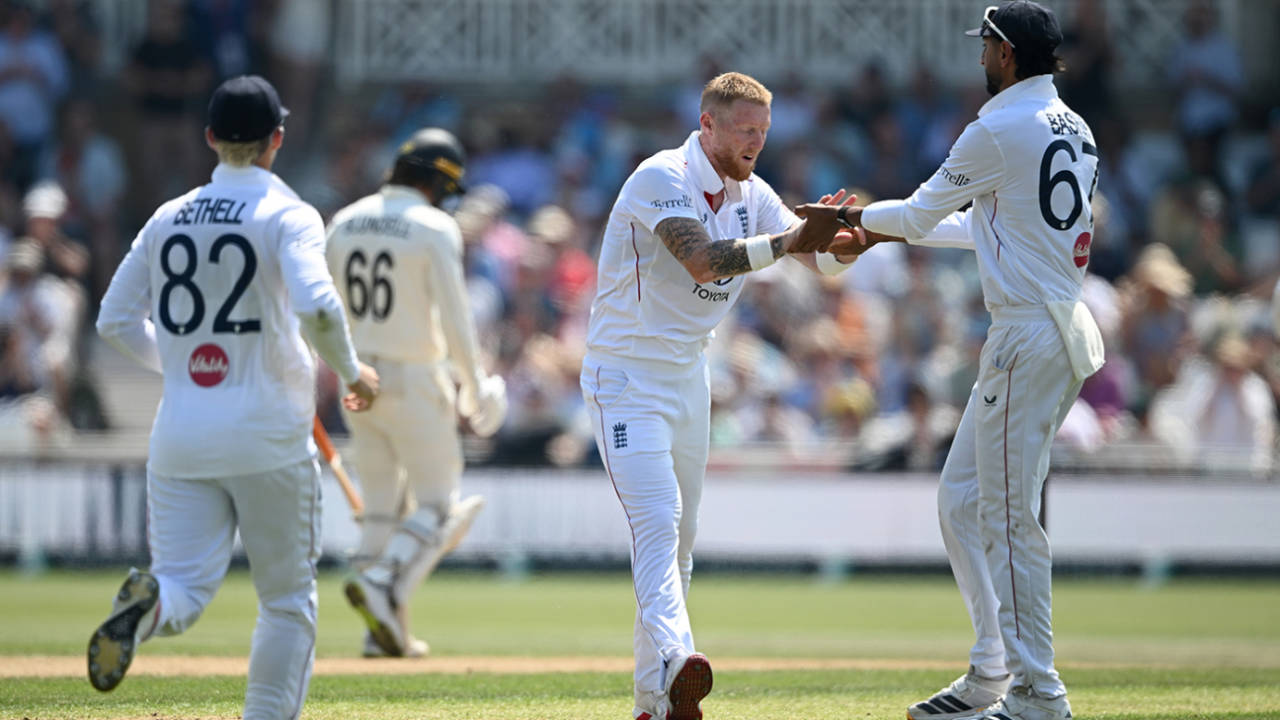
The second morning of play in Nottingham was marred by a contentious Decision Review System (DRS) call that stirred significant debate and drew sharp criticism from cricket luminaries. The incident, involving New Zealand’s Mitchell Santner, reignited discussions about the thoroughness and speed of third umpire decisions in high-stakes cricket matches.
Contents
The Incident: Santner’s Dismissal and Immediate Review
The pivotal moment occurred when Mitchell Santner faced a back-of-a-length delivery from England’s formidable all-rounder, Ben Stokes. The ball appeared to deflect towards Jacob Bethell in the gully. On-field umpire Nitin Menon swiftly gave Santner out caught, prompting an immediate review from the New Zealand batsman. Santner, convinced he had not hit the ball, gestured towards his arm guard, which was concealed beneath his long sleeves, as Stokes questioned his decision to review. In response, Stokes pointed to the sweatband of Santner’s glove, suggesting that was where contact had been made.
The Third Umpire’s Swift Verdict
The review process, overseen by third umpire Adrian Holdstock, unfolded with remarkable speed. From the commencement of the first replay, a mere 36 seconds elapsed before Menon’s initial on-field decision was upheld. Holdstock’s verdict was based on watching a single replay, supplemented by a split-screen view featuring UltraEdge technology. His conclusion was that the ball had made contact with the sweatband, which, according to Appendix A.2.5 of the MCC’s Laws of Cricket, is considered an integral part of the bat. Holdstock articulated his decision succinctly, stating, “The ball makes contact with the glove.”
Santner’s reaction upon receiving the decision was one of clear bewilderment. He cast a quizzical glance towards umpire Menon before reluctantly making his way back to the pavilion, his expression reflecting his disbelief at the outcome. This swift and seemingly definitive judgment by the third umpire immediately sparked discussion among commentators and spectators alike.
Kumar Sangakkara’s Immediate Concerns
Among the most vocal critics was former Sri Lankan captain and legendary batsman, Kumar Sangakkara, who was commentating on Sky Sports. Sangakkara wasted no time in questioning the validity of the decision, specifically raising doubts about whether the ball had indeed made contact with the sweatband as concluded by Holdstock. His experienced eye and deep understanding of the game led him to scrutinize the evidence presented.
Further compounding the skepticism was the broadcast of an additional side-on angle by Sky Sports, which was subsequently revealed. This particular replay cast considerable doubt on the assertion that the ball had brushed the sweatband. Crucially, this alternative angle would have been available to Holdstock had he requested additional evidence during his review. The fact that it was not seemingly utilized or considered added another layer of controversy to the unfolding events.
A Call for Thoroughness: Sangakkara’s Detailed Critique
Sangakkara articulated his concerns with clarity and conviction, emphasizing the critical importance of a meticulous review process. “You got to ask the question: why weren’t the other replays warranted, in terms of making that call?” Sangakkara questioned, highlighting the apparent oversight. He elaborated on the availability of diverse camera angles, stating, “You have so many different angles you need to ask for. On this [angle], it seems it might have touched. But on the other angle, you see clearly that he’s not [touched the ball].”
The former wicketkeeper-batsman stressed the need for patience and comprehensive analysis from the third umpire. “One thing [Holdstock could do] is to ask for the right angles, take your time, make a decision because there are crucial ones in any format of the game at crucial times,” Sangakkara asserted. He further advised, “sometimes, taking the time to really analyse every angle possible that is available to you as a third umpire might be advisable.”
Sangakkara underscored the fundamental principle guiding third umpire responsibilities: “When something gets referred, the third umpire has a lot of time – as much as he needs – to understand what replays are available and what [the] actual angle is, in terms of making that decision.” This statement served as a powerful reminder that the essence of DRS lies in employing all available technological resources to arrive at the most accurate conclusion, irrespective of the time it may take.
Differing Opinions and the ‘Quick Trigger Finger’ Debate
While Sangakkara’s Sky Sports colleagues, Mark Butcher and Dinesh Karthik, expressed disagreement with the notion that the wrong decision had ultimately been reached, they did offer a nuanced perspective. Mark Butcher, in particular, lent support to the view that Holdstock had been “a little quick on the trigger finger.” This partial agreement highlighted a consensus on the need for more deliberation, even if the final outcome might not have changed in their individual assessments.
It is important to note the protocol concerning inconclusive evidence in DRS. If Holdstock had determined that the evidence from the available replays was inconclusive, the standing instruction would have been to advise the on-field umpire, Nitin Menon, to uphold his initial decision. However, Sangakkara’s point was not about the outcome in such a scenario, but rather about the diligence applied in reaching a definitive conclusion – or indeed, in determining inconclusiveness. The concern was the perceived lack of thoroughness in exploring all available angles before a judgment was made.
The Imperative of Thorough DRS Application
The incident surrounding Mitchell Santner’s dismissal serves as a crucial reminder of the significant impact DRS decisions have on the flow and outcome of a cricket match. While technology aims to eliminate human error, the interpretation and application of that technology by officials remain paramount. The debate initiated by Kumar Sangakkara underscores the ongoing call for third umpires to utilize their mandate fully, ensuring that every available piece of evidence is scrutinized with due care and time, upholding the integrity and spirit of the game. Precision, not merely speed, must be the guiding principle in these critical moments.