Boland ‘big three’ debate reignites with full set of quicks available: Who misses out?

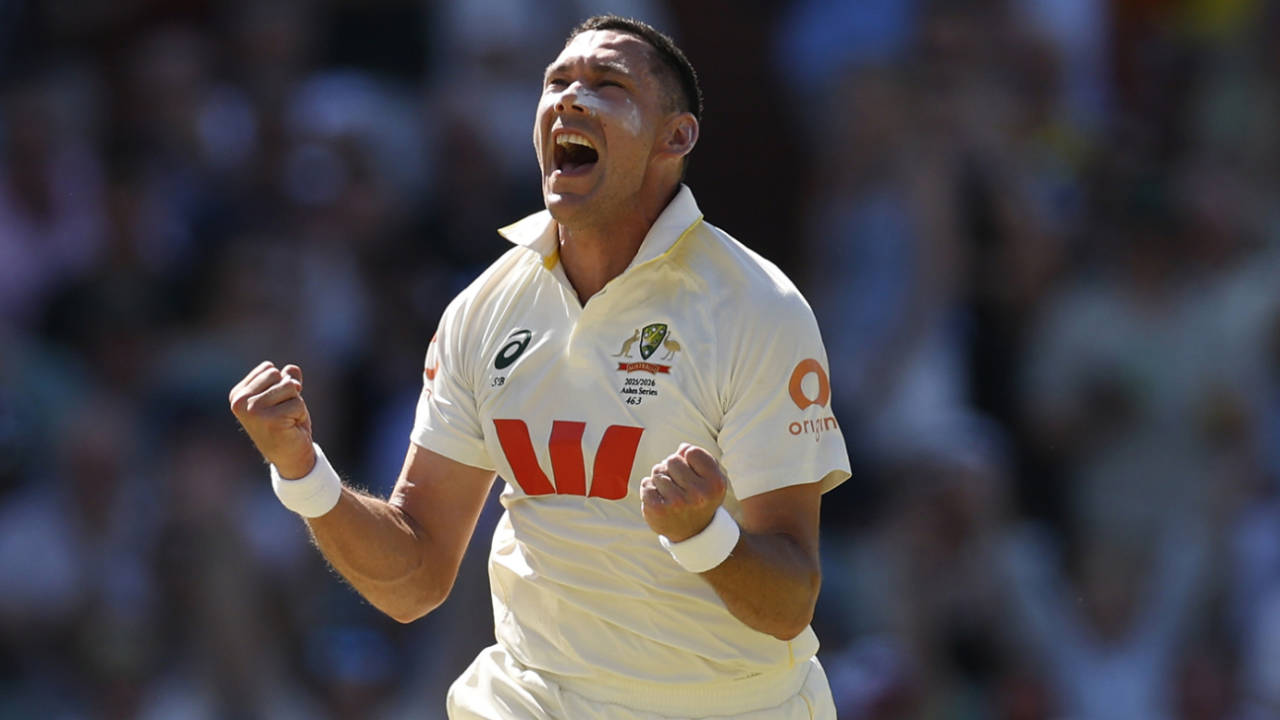
Australia’s selection committee faces a significant challenge as a full complement of its premier fast bowlers becomes available, rekindling the familiar “Boland ‘big three’ debate reignites with full set of quicks available.” With the two-Test series against Bangladesh in August fast approaching, the selectors, led by George Bailey, must decide who among Scott Boland and Josh Hazlewood will join captain Pat Cummins and Mitchell Starc in the starting XI. The depth of talent in Australia’s pace battery is undoubtedly a strength, but it also presents a complex puzzle for the team management.
Contents
The Resurgence of Australia’s Pace Battery
For the first time since the Caribbean tour last year, all four frontline quicks – Pat Cummins, Mitchell Starc, Josh Hazlewood, and Scott Boland – have been named in a full-strength 13-man squad. This significant development comes after a period where injuries plagued key players. Hazlewood missed the entirety of the last Ashes series, while Cummins featured in only one Test due to a back injury. Nathan Lyon, the sole spinner in the current squad, also suffered a severe hamstring injury during the Ashes, limiting his participation. Their return to full fitness underscores the formidable options at Australia’s disposal, setting the stage for a keen contest for places in the Test team.
The inclusion of this quartet for the upcoming series in Darwin and Mackay has meant that Ashes hero Michael Neser and Brendan Doggett, who played in the early Ashes Tests, were squeezed out of the squad entirely. This highlights the intense competition for spots and the high bar set by the established fast bowlers. With conditions at TIO Stadium in Darwin almost certainly requiring a frontline spinner, Nathan Lyon’s spot appears secure, meaning one of the two outstanding quicks, Hazlewood or Boland, will likely miss out on the starting XI.
Scott Boland’s Irresistible Case
Scott Boland has consistently proven his mettle in Test cricket, especially on home soil, and is now mounting a strong case to be considered a permanent fixture in Australia’s ‘big three’. Despite his remarkable record, Boland has often found himself on the sidelines when all front-line quicks are fit. The last instance where all four were available saw Boland miss out during the Caribbean tour, with only three quicks selected. Historically, Boland has been chosen ahead of one of the ‘big three’ only once, during the 2023 World Test Championship final when Hazlewood was recovering from an Achilles issue. Boland then retained his place ahead of Starc in the subsequent first Ashes Test at Edgbaston.
However, since then, despite his undeniable impact, Boland has frequently been overlooked when the established trio of Cummins, Starc, and Hazlewood were all fit. This pattern, however, might be changing. Chair of selectors George Bailey acknowledged the ongoing discussions surrounding Boland’s status. “Constantly, and it’s not something that we haven’t looked at,” Bailey stated. “Scotty would never say it, but I think he’s mounting a strong case that when you use the words ‘the big three’, that he could be one of those.”
Boland’s statistics are indeed compelling: 82 wickets at an astounding average of 18.58 from 19 Tests. An even more impressive 69 of those wickets have come in Australia at a paltry 16.20 runs apiece. Crucially, despite being 37 years old, Boland has not missed a single Test through injury since his debut in 2021. He has successfully managed minor plantar fasciitis and knee tendonitis issues over the past year, leading to him playing five consecutive Tests for the first time in his career during the last Ashes series. This consistent availability and exceptional performance make his case for inclusion increasingly difficult to ignore.
Josh Hazlewood’s Enduring Quality and Injury Concerns
On the other side of this selection debate is Josh Hazlewood, a bowler whose record speaks volumes. The 35-year-old boasts 295 wickets at an impressive average of 24.21 from 76 Tests, establishing himself as one of Australia’s most reliable pace options for over a decade. His ability to maintain relentless accuracy and extract bounce makes him a formidable threat in any conditions. However, Hazlewood’s recent history with injuries presents a significant concern for the selectors, particularly in contrast to Boland’s robust availability.
A recurring issue for Hazlewood has been sustaining injuries in the first Test or first-class fixture he plays, a pattern observed in four of the last five summers. This ‘first-up injury’ syndrome has prompted Australia’s high-performance staff to implement specific adjustments to his program over the last two months, following the conclusion of the IPL. George Bailey elaborated on these efforts: “There has been some adjustments to both his training and some of his physical prep to try and alleviate some of those setbacks that he’s had.” He added that such adjustments are “not uncommon” for experienced players and that the collective bowling unit is on “slightly different training regimes” to manage workloads effectively.
Last winter, a different strategy was attempted, with Hazlewood continuing to play white-ball series post the Caribbean Test tour to maintain his physical conditioning. This was in contrast to Starc and Boland, who underwent an extended rest period and a comprehensive pre-season build-up for the Ashes. Unfortunately, this approach backfired for Hazlewood, who suffered hamstring and Achilles injuries, prematurely ending his summer before the Ashes even began, while Boland and Starc successfully navigated all five matches. This experience has undoubtedly informed the current management strategies.
Strategic Management and Future Planning
Recognizing the demanding schedule ahead, a proactive decision was made this winter to rest Hazlewood, Starc, and Cummins from the white-ball tours of Pakistan and Bangladesh in June, post-IPL. This provided them with a substantial block of focused training, mirroring the regimen Boland typically follows as a Test-only bowler. Selectors and Cricket Australia’s staff are now actively exploring how to integrate similar training blocks into the next 12 months, given Australia’s packed calendar of 20 (potentially 21) Tests, nine ODIs, and five T20Is, with the only significant break being the IPL period next April and May.
George Bailey emphasized the importance of this strategic approach: “Part of it will be identifying some periods when there are small gaps between Test series and white-ball series over the next 18-24 months, where you can maybe invest a little bit back into the body and into the mind to stay fresh.” He also clarified that selectors are not pre-planning to rest any quicks from specific Tests or series, although the India series in January and February might offer opportunities for rotation if conditions dictate. The overarching principle is recognizing that depth will be crucial, as demonstrated during the Ashes.
The unknowns of workload within individual Test matches and series, coupled with varying conditions across the 21 Tests, will ultimately influence selection decisions. “Our planning is that across the 21 Tests that there will be different times when there will be different names and a different line-up and how that looks,” Bailey confirmed. “But not so much forecasting in terms of mapping out that they’ll miss certain games. The conditions and, I guess, the outcomes will dictate that a little bit as well.” The ‘Boland ‘big three’ debate reignites with full set of quicks available, signifying a healthy but challenging situation for Australian cricket, where managing elite talent and ensuring peak performance requires foresight and flexibility.