Women’s cricket shortchanged again as men’s Test binfire sucks up the oxygen

Contents
A Missed Opportunity for the Women’s Game
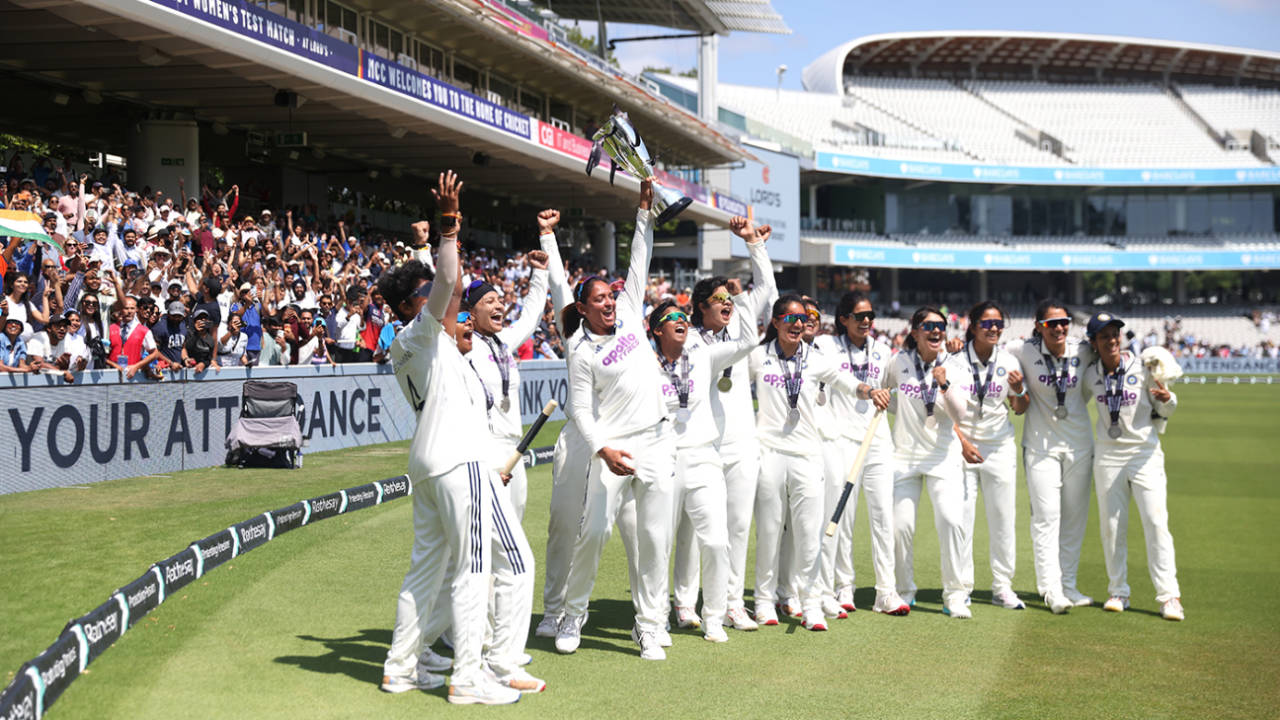
The atmosphere at Lord’s was electric. Crowds were queuing round the block, cameras at the ready, eager to catch a glimpse of the stars on the pitch. It was a historic women’s Test match, and India’s performance was nothing short of commanding. A record-breaking attendance of 37,846 across the game signaled that there is a genuine, growing hunger for the women’s game. Yet, beneath the surface of this historic occasion, a familiar and frustrating narrative persisted.
As the Indian team celebrated their victory, the focus shifted to the hosts. While England’s women have shown immense grit and progress, their midsummer limelight was ruthlessly hijacked. The ECB’s handling of the men’s team’s ongoing turbulence meant that the women’s historic moment was repeatedly buried under a mountain of distractions.
The Battle for Oxygen
The absurdity of the situation reached a peak when England captain Heather Knight found herself addressing the media in a makeshift squash-court at Lord’s, at the very same moment that Brendon McCullum, the men’s coach, was being sacked. This was not a mere coincidence; it was a symptom of a governing body that seems unable to manage its own house. The limited oxygen of the sporting news cycle was entirely consumed by a men’s ‘binfire’—a series of crises that the ECB seemed to fuel rather than extinguish.
From the controversial axing of players to public spats regarding mental health and bombshell retirement announcements, the men’s narrative was allowed to trample all over the women’s T20 World Cup window. It was as if the ECB were actively ensuring that no headline could be written about the women’s game without a men’s cricket disaster appended to it.
Management Failures
The timing of these distractions was particularly damning. Whether it was Rob Key’s public defenses, the fallout from disciplinary investigations, or the poorly timed announcement of coaching staff departures, the senior management at the ECB fell short of their responsibilities. They had promised a summer that would showcase the progress of the women’s game, yet they consistently allowed the men’s internal politics to take precedence.
Richard Gould, the ECB chief executive, acknowledged the regret regarding the timing of major announcements, but these were sentiments that offered little comfort to players like Heather Knight and Tammy Beaumont. These athletes were denied the focused send-offs they deserved, their final innings overshadowed by the chaotic ‘Baz’ shockwaves rippling through the men’s news cycle.
A Future Still Waiting
Despite the ECB’s operational failures, the success of the women’s game is undeniable. The T20 World Cup saw record-breaking ticket sales and massive public interest. More than 300,000 tickets were sold in a single month, proving that the appetite for women’s cricket is stronger than ever. The MCC, for its part, made meaningful strides in honoring the sport’s history, from the unveiling of new portraits in the Long Room to plans for a dedicated sculpture.
However, the stark reality remains: the sport still has a massive distance to travel. When the end of 142 years of gender-based injustice at Lord’s is treated as a secondary priority to the inept timing and drama of the men’s team, it serves as a depressing reminder of where the sport’s true priorities lie. If England is to ever reach the heights of other successful national teams, the governing body must learn to support its women’s side with the same level of care and respect it reserves for its own internal fires.
Moving forward, the challenge is clear: women’s cricket deserves to stand on its own merits, unencumbered by the shadow of the men’s game. Until the ECB recognizes that the women’s game is not an afterthought, the sport will continue to be shortchanged by those meant to nurture it.