‘I’m still alive’ – Athapaththu channels her pain into thrilling display

Contents
A Resounding Statement on the Global Stage
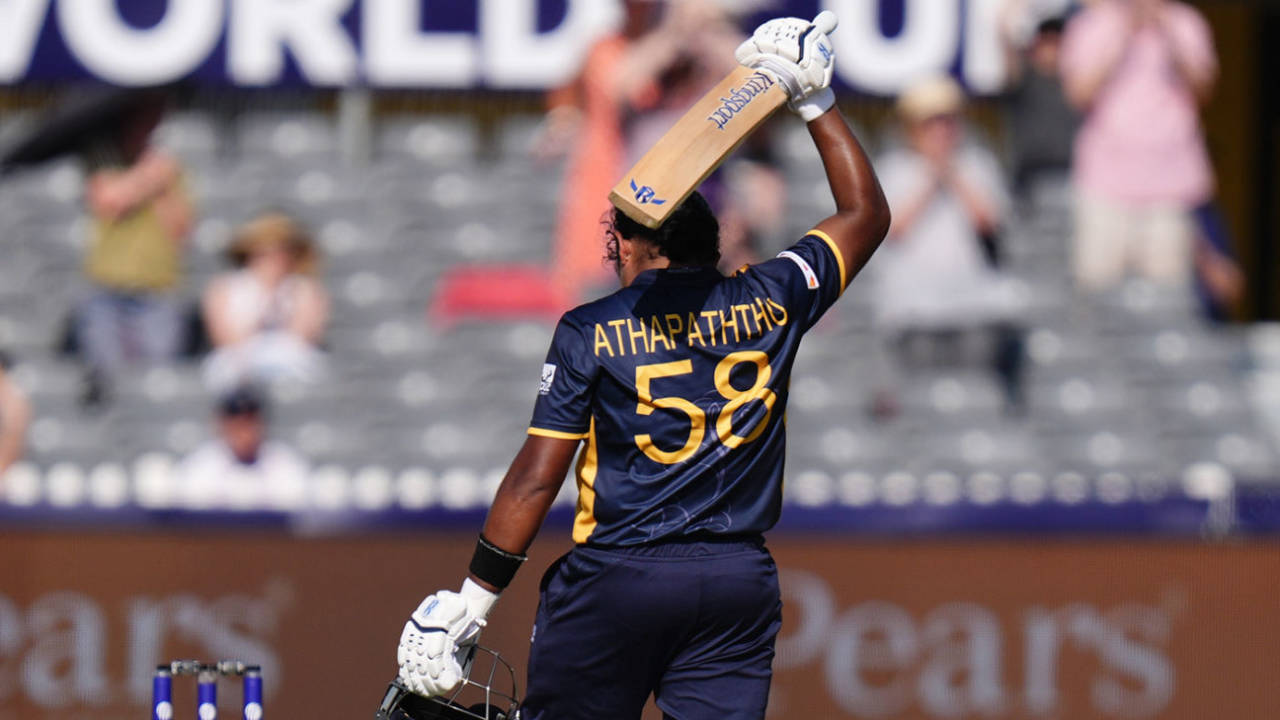
In a sport defined by the fickle nature of form and the crushing pressure of expectations, few players carry the weight of an entire nation quite like Chamari Athapaththu. Just days after openly labeling herself a failure due to Sri Lanka’s inability to progress past the group stages in ten T20 World Cup appearances, the veteran captain delivered an emphatic response. Her blistering 106 off 61 balls against Ireland was not merely a stat-padding exercise; it was a defiant declaration of her enduring relevance in the game.
A Masterclass in Dominance
Chasing a modest target of 131, Athapaththu turned the pitch into her personal playground. Her century accounted for a staggering 79.1% of Sri Lanka’s total runs—the highest contribution by a single player in a T20I innings of over 100 runs. Her innings was a blend of calculated aggression and pure skill, featuring 17 boundaries and two towering sixes. Each shot seemed to carry a message, a sentiment she later confirmed: she is not done yet.
Reflecting on her performance, Athapaththu admitted that the harsh criticism she faced over the last 18 months served as motivation. ‘I love those comments because otherwise I won’t improve,’ she remarked. ‘Sometimes healthy criticism is really good for a cricketer. That’s why I played a good game today and I showed my jersey and my name because I said to the others, I’m still alive.’
The Burden of Leadership
At 36 years old, the question of retirement often follows legendary cricketers, yet Athapaththu’s actions on the field suggest she remains the most vital cog in the Sri Lankan machine. Her century celebration—pointing directly at her name and number on her jersey—was a poignant moment, signaling that while she may be a veteran, her hunger remains insatiable.
The underlying concern, however, remains the lack of depth surrounding her. Athapaththu stands as the only T20I centurion for Sri Lanka. While young talents like Kavisha Dilhari and Kaushini Nuthyangana show promise, the transition from potential to world-class performance is a chasm that Sri Lanka has yet to bridge. Athapaththu herself acknowledges this disparity, pointing out that the lack of franchise cricket exposure for players from nations like Sri Lanka, Bangladesh, and Pakistan hampers the development of elite talent.
Franchise Cricket as a Catalyst for Growth
Having experienced the rigors and rewards of global franchise leagues, Athapaththu understands the value of sharing dressing rooms with world-class players. ‘We don’t have three or four world-class players in my team,’ she explained. ‘The team is very young and they don’t have franchise exposure and the experience. We find good players but it’s too hard to build a good team without good world-class players.’ For her, the path forward for women’s cricket in the subcontinent lies in creating more opportunities for players to compete in diverse, high-pressure environments.
Eyes on the Future
Despite her individual brilliance, Athapaththu remains haunted by the team’s tournament fortunes. Her desire to see Sri Lanka reach a World Cup knockout stage remains unfulfilled, a fact that weighs heavily on her. ‘As a player I’m really worried about that,’ she said, reflecting on the missed opportunities in the current campaign.
While the path to the semi-finals in the current T20 World Cup remains mathematically slim, the focus now shifts toward automatic qualification for the 2028 tournament and the upcoming inaugural Champions Trophy. As long as Athapaththu is at the helm, playing with the intensity and passion she displayed against Ireland, Sri Lanka retains a glimmer of hope for future silverware. She has proven that she is more than just a captain; she is the fuel that keeps the dream of Sri Lankan women’s cricket burning bright.