Why India’s Lord’s Test win is not a surprise: Analyzing the Factors

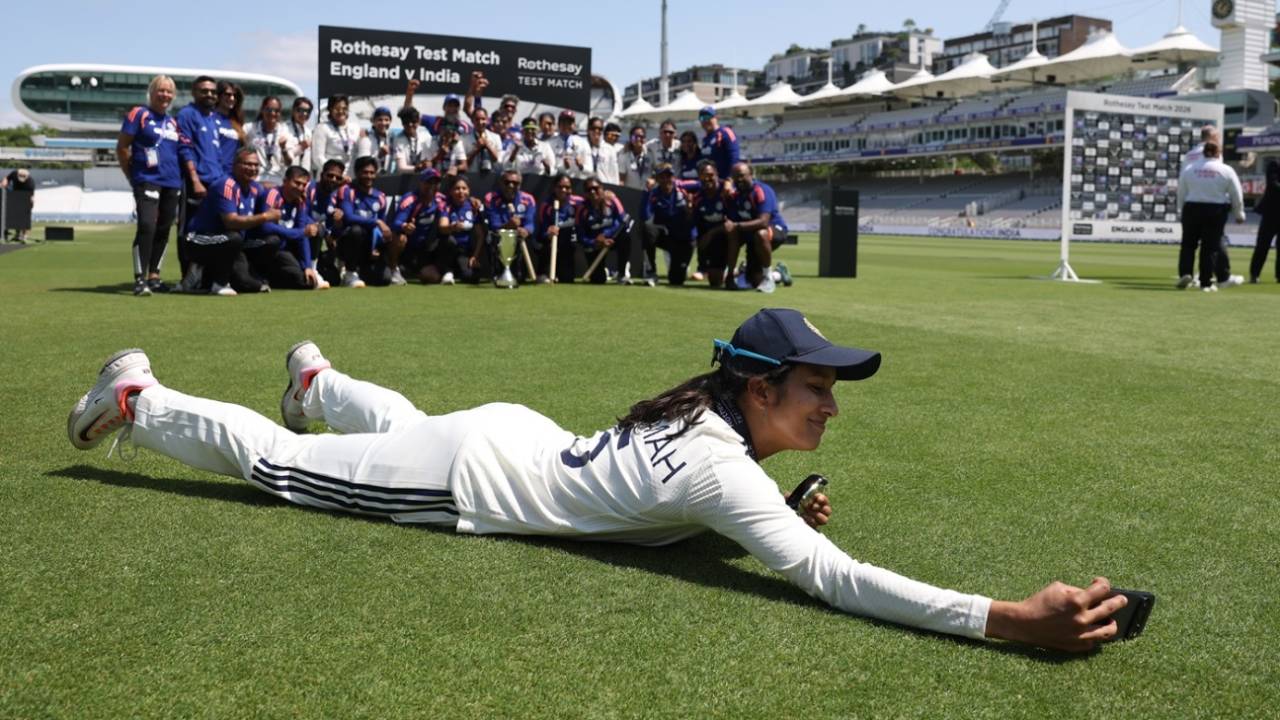
The iconic Lord’s Cricket Ground witnessed a historic moment as India’s women’s team secured a resounding 270-run victory over England in the first-ever women’s Test played at the venue. This landmark achievement, culminating in Sneh Rana’s picture-perfect offspinner’s delivery to Sophie Ecclestone, was more than just a triumph; it was a testament to meticulous planning and a deep-rooted commitment to red-ball cricket development. While the margin of victory was substantial, the underlying factors reveal why this dominant performance by India was, in fact, not a surprising result.
Contents
Strategic Preparation and Contrasting Fortunes
A significant factor contributing to India’s success was their superior preparation leading into the Test match. India had engaged in a Test match just two months prior in March, providing them with invaluable recent red-ball match practice. In stark contrast, England’s last competitive red-ball fixture dated back to January 2025 – a substantial gap that undoubtedly impacted their readiness for the demands of Test cricket. Furthermore, England faced an extremely tight turnaround following the T20 World Cup final held at the same venue just days before the Test. With only two training sessions allocated for a complete format switch and acclimatization to the red Dukes ball, their preparation was far from ideal.
Conversely, India’s earlier exit from the T20 World Cup, marking their second successive league-stage departure, inadvertently provided them with a crucial advantage: time. This afforded the Indian squad additional training sessions dedicated to red-ball specifics. They spent several days honing their skills at the Wormsley Cricket Club ground before making their way to St. John’s Wood, allowing for a more thorough and structured build-up to the Test match.
The Revival of Domestic Red-Ball Cricket
Perhaps the most critical catalyst behind India’s impressive Test success lies in the revitalization of their domestic red-ball competition. Historically, India’s women’s domestic circuit featured a multi-day tournament until its discontinuation in the 2017-18 season. The scarcity of women’s Tests on the international calendar led the BCCI to prioritize white-ball and age-group domestic tournaments, an understandable shift at the time. However, with India’s consistent return to playing Test cricket since June 2021, the imperative for a robust domestic feeder system became undeniable.
Recognizing this vital need, the Senior Women’s Inter-Zonal Multi-Day Trophy was reintroduced into the domestic calendar from the 2023-24 season. This strategic move provided a much-needed platform for players to refine and hone their red-ball skills. The impact of this revival was immediately evident in the Lord’s Test squad. At least eight members of India’s playing XI, and 12 from the broader squad (including Pratika Rawal, who was ruled out due to injury), had participated in at least one red-ball game within the preceding two years. Notably, both Rawal and her replacement for the Test, Priya Punia, had demonstrated their proficiency by scoring centuries in the inter-zonal red-ball tournament held earlier in March, highlighting the competition’s effectiveness in preparing players for the longer format.
Experienced Performers Shine
The benefits of domestic red-ball exposure were vividly displayed by individual performances. Yastika Bhatia, who etched her name into history as the first woman to score a Test century at Lord’s, may have only played four Test matches internationally. However, her foundational red-ball experience is significantly richer, attributed to her 13 first-class appearances in the domestic circuit. Similarly, Smriti Mandhana, India’s second-leading run-scorer in women’s Tests with 788 runs in nine matches, boasts an impressive 15 first-class appearances. This extensive experience in the longer format was instrumental in India’s ability to maintain control and keep England under pressure for substantial periods throughout the Test match.
To further underscore this contrast, England’s most-capped player in this particular Test, Heather Knight, also possessed 15 first-class matches to her name. However, all of Knight’s red-ball experience came exclusively in high-pressure international Tests, without the luxury of a domestic long-form system to refine her game. It came as no surprise then that Knight, who announced her retirement from international cricket after the Lord’s game, passionately advocated for the introduction of domestic red-ball matches for England’s women.
Heather Knight’s Call for Domestic Red-Ball Cricket
In her post-match reflections, Heather Knight articulated a clear vision for the future of women’s cricket development in England. “I’d love to see some domestic red-ball cricket,” she stated, emphasizing its potential as a “massive development tool.” Knight highlighted the invaluable lessons learned from playing Test matches, particularly in terms of sustaining concentration, repeating efforts, and mastering the mental aspects over prolonged periods. She acknowledged the logistical challenges but stressed the fundamental benefits, even suggesting a limited calendar might suffice.
Knight firmly believed that domestic red-ball cricket would not only enhance Test match capabilities but also serve as a crucial foundation for white-ball cricket. “I think it gives you the basis and the fundamental skills you need in white-ball cricket as well,” she explained, pointing to the development of innings-building for batters and spell-shaping for bowlers. She praised India’s preparation and execution, noting their ability to “repeat under pressure” and “read the game,” skills undoubtedly honed through greater red-ball exposure. Her observations also touched upon a generational shift, with younger players, accustomed to T20 and 50-over formats, perhaps lacking the ingrained value for their wicket that multi-day cricket instills.
India’s Unique Position in Women’s Cricket
India currently stands almost alone among cricketing nations in possessing a comprehensive red-ball competition for women. This provides their players with a distinct advantage in terms of experience and skill development in the longer format. For instance, before making her Test debut in Perth in March, Sayali Satghare had already accumulated five first-class matches. While Australia is the only other country to host a domestic red-ball game for women, it is a relatively new and one-off fixture between CA Green and CA Gold, initiated in 2024, and does not yet match the breadth of India’s inter-zonal tournament.
Statistically, India’s dominance in women’s Tests against England is well-documented. They have maintained an undefeated record against England in Test matches played on English soil, with their last defeat to England occurring way back in 1995 in Jamshedpur. Furthermore, India has registered their biggest and second-biggest wins in the format in their last two Tests against England, underscoring their growing prowess. Given the global scarcity of women’s Test cricket and the significant disparities in domestic red-ball infrastructure, the sheer magnitude of India’s achievement at Lord’s, while historic, becomes less surprising when viewed through the lens of their strategic investment and player development. It is a powerful statement about the importance of nurturing the longer format from the grassroots up.